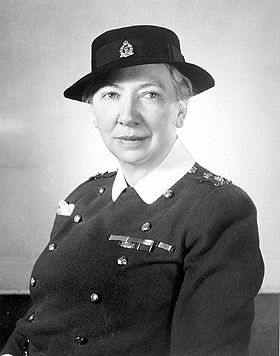
Colonel Elizabeth Lawrie Smellie, CBE, RRC (22 March 1884 – 5 March 1968) was one of the most influential figures in the history of Canadian military nursing. A veteran of both the First and Second World Wars, she served as Matron-in-Chief of the Royal Canadian Army Medical Corps during the Second World War and, in 1944, became the first woman promoted to the rank of Colonel in the Canadian Army, a distinction widely regarded as making her the first woman in the British Commonwealth to attain that rank. Through her leadership, organizational skill, and unwavering commitment to professional nursing, she helped shape Canadian military nursing for generations.
Born in Port Arthur, Ontario (now Thunder Bay), Smellie was the daughter of physician Dr. Thomas Stuart Traill Smellie and Janet Eleanor Lawrie. After completing her education in Port Arthur, she enrolled at the prestigious Johns Hopkins Hospital School of Nursing in Baltimore, graduating in 1909. Returning to Ontario, she served as Night Superintendent at McKellar General Hospital, where she quickly earned a reputation as an outstanding nurse and administrator.
When the First World War began, Smellie volunteered for overseas service and was appointed a Nursing Sister with the Canadian Army Medical Corps in 1915. Serving in military hospitals in England and France, she distinguished herself through exceptional clinical skill and leadership. In 1917 she was awarded the Royal Red Cross (First Class), one of the highest honours bestowed upon military nurses within the British Empire. By the end of the war she had been appointed Assistant to the Matron-in-Chief, gaining invaluable experience in the administration of Canada’s growing military nursing service.
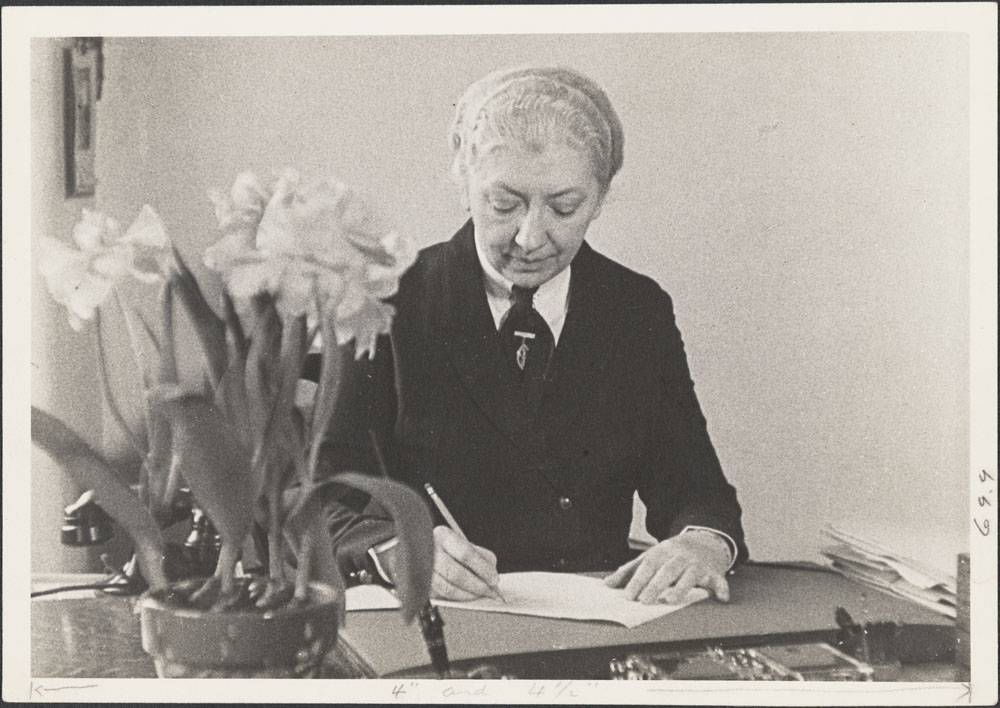
Following the war, Smellie continued to advance the nursing profession. She undertook postgraduate studies in public health nursing before joining the faculty of McGill University, where she helped educate future nursing leaders. In 1924 she became Chief Superintendent of the Victorian Order of Nurses (VON), one of the most senior nursing appointments in Canada. Over the next fifteen years she strengthened community nursing services across the country, promoted higher standards of nursing education, and expanded access to public health care in rural and remote communities.
Smellie’s expertise earned international recognition. She conducted a maternal and child welfare study for the Rockefeller Foundation and served as First Vice-President of the American Public Health Association, reflecting the high regard in which she was held by colleagues across North America. In recognition of her exceptional contributions to nursing and public health, she was appointed a Commander of the Order of the British Empire (CBE) in 1934. In 1938, the Canadian Nurses Association awarded her the Mary Agnes Snively Medal, one of the profession’s highest honours, recognizing her outstanding contribution to Canadian nursing.
I had the privilege of being an older woman in the Army this time and sometimes they listened to what I said.
With the outbreak of the Second World War, Smellie again answered the call to military service, returning as Matron-in-Chief of the Royal Canadian Army Medical Corps. Her responsibilities were unprecedented. From a small peacetime establishment, she oversaw the expansion of the Army Nursing Service to more than 3,600 Nursing Sisters. These nursing officers served in military hospitals throughout Canada, Britain, Europe, the Mediterranean, and Asia, providing care wherever Canadian soldiers were deployed.
Her influence extended well beyond the Army Nursing Service. Smellie assisted in the development of the nursing services of the Royal Canadian Navy and the Royal Canadian Air Force, helping establish high professional standards across Canada’s military medical services. She also played a central role in the creation of the Canadian Women’s Army Corps (CWAC) in 1941. Recognizing that women could make valuable contributions in a wide range of military occupations, she helped open new opportunities for women to serve in uniform beyond traditional nursing roles, leaving a lasting impact on the evolution of women’s military service in Canada. She retired from military service later that year and returned to the Victorian Order of Nurses, guiding the organization through the transition from wartime to peacetime healthcare before retiring permanently in 1947.
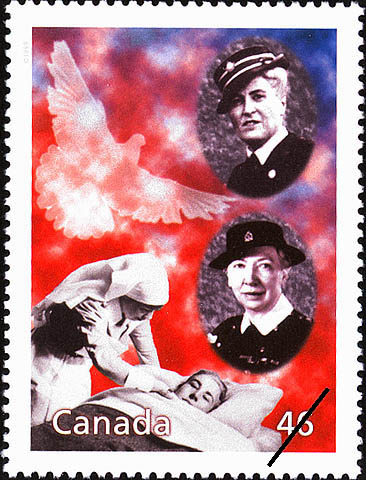
Colonel Smellie’s achievements have been recognized through numerous honours and commemorations. She was designated a National Historic Person of Canada in 2011, and commemorative plaques stand in both Ottawa and Thunder Bay. Her leadership helped establish the professional standards and organizational foundations that continue to guide Canadian military nursing today.
Elizabeth Lawrie Smellie’s influence reached far beyond the hospitals in which she served. Through her leadership during two world wars, her stewardship of the Victorian Order of Nurses, and her advocacy for professional nursing, she helped shape the modern Canadian military nursing service. More than any other individual, she bridged the era of the First World War Nursing Sister and the professional military nursing officer of the post-war Canadian Armed Forces. Her legacy continues to inspire generations of Canadian military nurses committed to service, leadership, and compassionate care.
Research Note: This profile has been compiled from official military service records, Library and Archives Canada holdings, published historical sources, newspaper accounts, and other publicly available historical records.