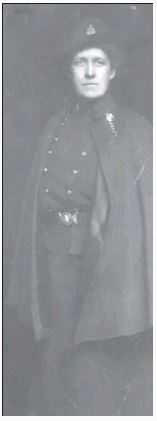
“A gifted leader, educator, and administrator, Edith Catherine Rayside helped shape Canadian military nursing during the First World War and the nursing profession that emerged in its aftermath.”
When Edith Catherine Rayside enlisted in the Canadian Army Medical Corps in February 1916, she brought with her nearly fifteen years of nursing experience, a university education, and a reputation as an accomplished hospital administrator. Those qualifications would propel her to become Canada’s Matron-in-Chief during the First World War, responsible for overseeing military nursing services across the country at a critical period in Canadian history.
Born on 26 January 1872 at Martintown, Ontario, Rayside earned a Bachelor of Arts from Queen’s University before graduating from the St. Luke’s Hospital School of Nursing in Ottawa in 1901. At a time when relatively few women attended university, she combined academic achievement with professional nursing education, establishing a foundation for a career that would span clinical practice, public health, education, and administration.
Before the First World War, Rayside’s career was anything but ordinary. She worked in private nursing, served as a public health nurse in Ottawa, and later became a district nurse in rural Saskatchewan. In 1908 she accepted the position of Superintendent of Nurses at the modern hospital operated by the Peñoles Mining Company in Mapimí, Mexico. Living through the political unrest of the Mexican Revolution, she gained valuable experience managing hospital operations under challenging conditions before returning to Canada in 1914.
Recognizing her exceptional administrative abilities, the Canadian Army Medical Corps commissioned Rayside as a Nursing Sister on 4 February 1916. Rather than serving as a junior nurse, she was immediately appointed one of only two matrons responsible for the nursing services of No. 2 Canadian General Hospital at Le Tréport, France. The hospital, with more than 1,000 beds, treated thousands of wounded and sick soldiers from the Western Front. There, Rayside supervised approximately seventy Nursing Sisters while ensuring the highest standards of patient care under wartime conditions.
Although she rarely wrote about herself, one surviving letter offers a glimpse into the realities faced by Canada’s Nursing Sisters. Describing the wounded arriving from the front, she wrote that their injuries were “too awful for words.” Yet, despite strict military discipline, she admitted to quietly giving Canadian patients “little favors on the Q.T.”—a reminder that compassion remained at the heart of military nursing even amid the horrors of war.
Rayside’s abilities soon attracted the attention of senior medical leadership. She was appointed Matron at Moore Barracks Hospital in Shorncliffe, England, before being assigned to the office of the Director General of Medical Services in London. On 11 September 1917 she returned to Canada to assume the appointment of temporary Matron-in-Chief at Militia Headquarters in Ottawa. In that role, she supervised nursing services in more than sixty Canadian military hospitals, managed the selection and posting of Nursing Sisters for overseas service, and helped direct military nursing during the influenza pandemic of 1918–1919.
Her distinguished wartime service earned significant recognition. She was Mentioned in Dispatches, received the Royal Red Cross (First Class) for exceptional nursing service, and was later appointed a Commander of the Order of the British Empire (CBE) in recognition of her lifelong contributions to nursing and public service.
Following the war, Rayside continued to influence Canadian nursing. After completing advanced studies in nursing education at Columbia University in New York, she helped modernize nursing education at the Montreal General Hospital and later served as Superintendent of Nurses at Hamilton General Hospital. She remained active in numerous professional organizations, including the Canadian Nurses Association and the Overseas Nursing Sisters’ Association of Canada, mentoring future nursing leaders and advocating for higher standards in nursing education and practice.
Edith Catherine Rayside retired to her family home in Martintown, Ontario, where she died on 20 December 1950 at the age of seventy-eight.
Today, Edith Catherine Rayside is remembered not only for her distinguished military service but also for her lasting influence on Canadian nursing. As Matron-in-Chief during one of Canada’s greatest national challenges, she demonstrated that military nursing required not only clinical excellence, but also leadership, organization, and unwavering dedication to those in need. Her career remains an enduring example of the professionalism and service that continue to define Canada’s military nurses.
Research Note: This profile has been compiled from official military service records, Library and Archives Canada holdings, published historical sources, newspaper accounts, and other publicly available historical records.