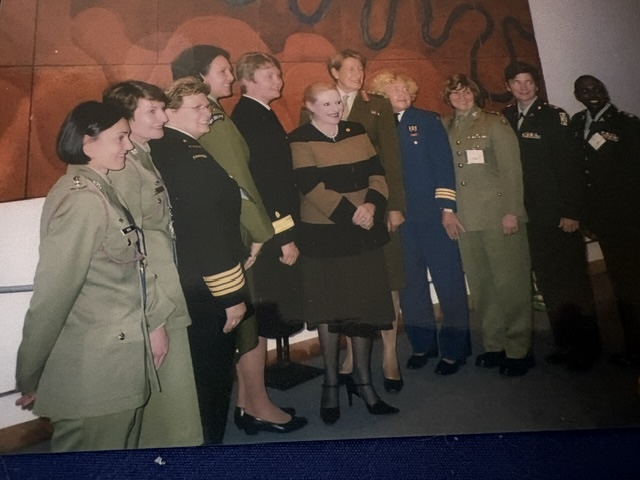
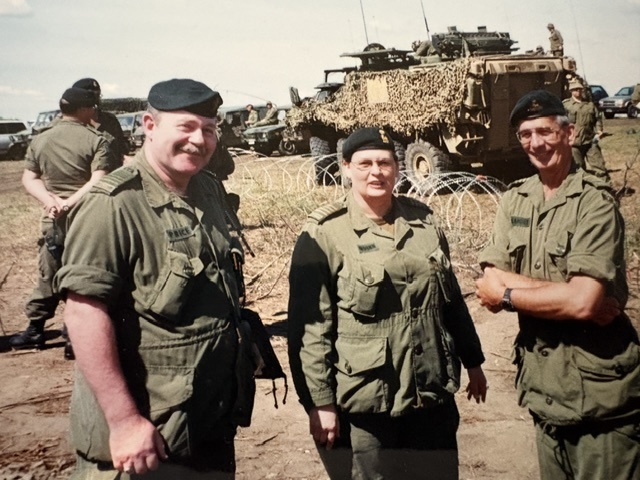
Colonel Marcia L. Quinn, OMM, MStJ, CD, built an exceptional career spanning clinical nursing, military command, health services transformation and international medical-reserve leadership. A Registered Nurse and Canadian Armed Forces (CAF) Nursing Officer, she is particularly notable as the first woman to command a Canadian Army brigade.
Marcia received her nursing education at St. Mary’s Hospital School of Nursing in Montréal. Her civilian clinical career included work as a staff nurse in adult and neonatal intensive care at St. Mary’s Hospital in Montréal, St. Joseph’s Hospital in Hamilton and Victoria Hospital in London, Ontario. Her broader nursing career included positions in college health services, occupational health, practice management and medical consulting.
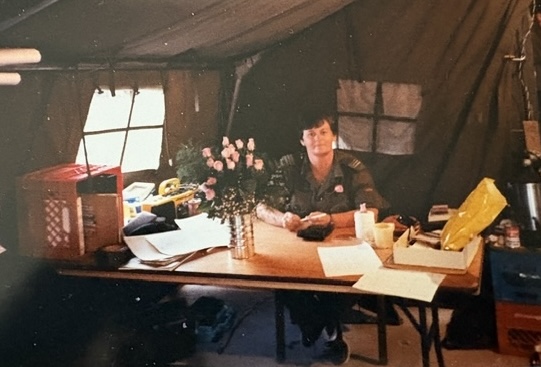
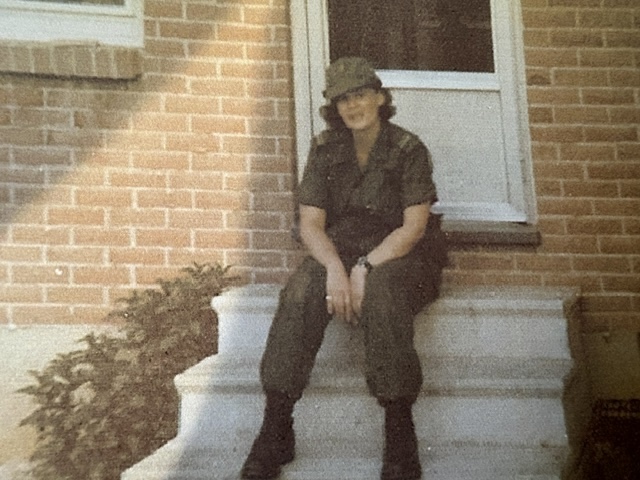
She joined the Canadian Armed Forces Militia (Army Reserve) in 1972 and progressively assumed positions of increasing responsibility as a Nursing Officer. Her early military career remained firmly rooted in military health services. In 1983, at the rank of Major, she became the first Nursing Officer and the first woman to command 23 (Hamilton) Medical Company. Promoted Lieutenant-Colonel, she later commanded 15 (Edmonton) Field Ambulance from 1991-1994, gaining progressively broader command experience that would eventually take her well beyond the traditional employment of a Nursing Officer.
Quinn was the Course Commander of the Junior Officer Staff Course while a staff officer at the Militia Command and Staff School. Post-command, she was Senior Staff Officer – Administration, and Deputy Chief of Staff at 41 Canadian Brigade Group (CBG) Headquarters in Alberta. On promotion to Colonel in 1998, she was appointed the Commander 41 CBG.
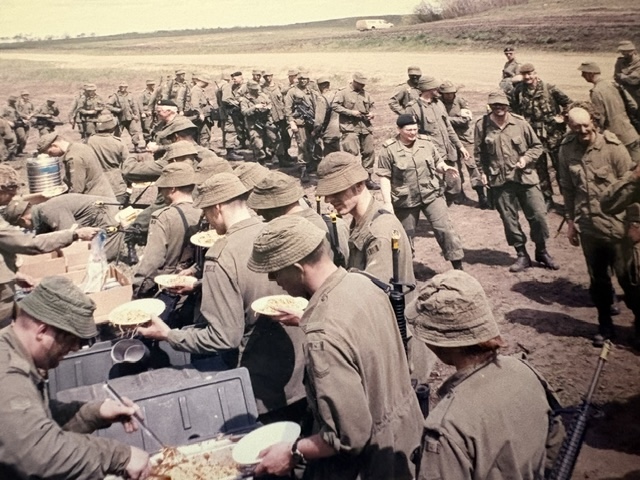
Command of a brigade represented a significant achievement not only for women in the CAF, but also for a military nurse. Colonel Quinn had progressed from clinical nursing and command within the military medical system to responsibility for an Army Reserve formation comprising units from across the combat arms, combat support and combat service support. As brigade commander, she was responsible for recruiting, training and retaining personnel in support of the Canadian Army’s Land Force Western Area’s mission. Her tenure also included responses to domestic emergencies, including flooding in Medicine Hat and forest fires in northern Alberta. For the Medical Companies under command she inaugurated Emergency Medical Responder training with the Northern Alberta Institute of Technology to bring the Medical Assistants training closer to the Regular Force standards.
If you believe something is truly right and everyone says no, find a way to get them to yes. Most times people will come around to a good proposal and the outcome can be significant, positive change.
In 2000, the CAF launched Rx2000, a comprehensive reform of the Medical and Dental services designed to rebuild capabilities diminished during the 1990’s and improve the quality, consistency, and operational effectiveness of military health care. The transformation reorganized the military medical and dental services into an integrated structure and consolidated command and responsibility for health care within a newly formed Canadian Forces Health Services Group. This included all former Naval Reserve, Militia, and Air Reserve medical units and personnel and formed a new Health Services Reserve. As part of this transformation Colonel Quinn returned to senior Health Services leadership as the Team Leader of the Rx 2000 Reserve Working Group and became the first Director Health Services Reserve and the Senior Reserve Advisor to the Director General Health Services/Commander Canadian Forces Health Services Group.
The task involved approximately 1,500 Health Services Reservists possessing widely differing military and professional competencies, ranging from basic first-aid qualifications to highly specialized physicians and nurses. A central objective was to develop a Reserve Health Services capability whose members could meet the standards required to augment Regular Force health services on operations in Canada and internationally. Colonel Quinn’s work included developing the structures, human-resource networks and implementation plans required to make that capability sustainable. She remained Director Health Services Reserves until 2007, when she retired from the CAF.
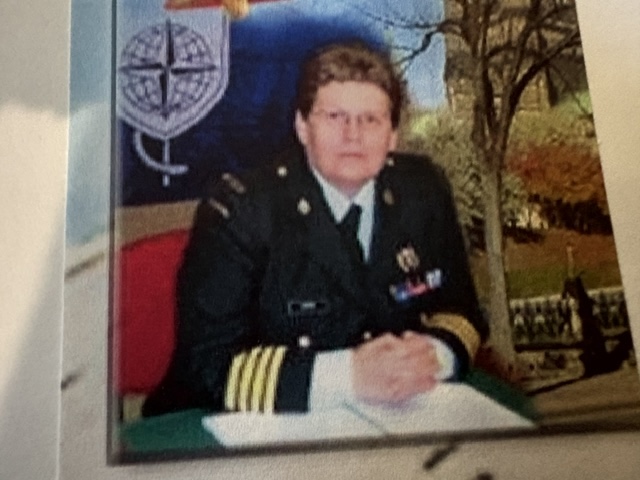
Her influence also extended internationally. Colonel Quinn developed relationships with allied military medical organizations. She was particularly proud of a new operational working relationship with the United States Army Medical Department that saw CFHS Reserve members participating in what became the Annual Global Medic exercises. She also became active in the Interallied Confederation of Medical Reserve Officers (CIOMR), the organization representing reserve medical officers within the wider NATO reserve community. From 2004 to 2006, she served as International President of CIOMR. During her presidency, she negotiated recognition of the CIOMR as a NATO associated member organization under the sponsorship of the Chiefs of Military Medical Services Committee (COMEDS). Her international work included presentations on Canada’s use of Health Services reservists and participation in discussions concerning NATO reserve medical capabilities and homeland defence.
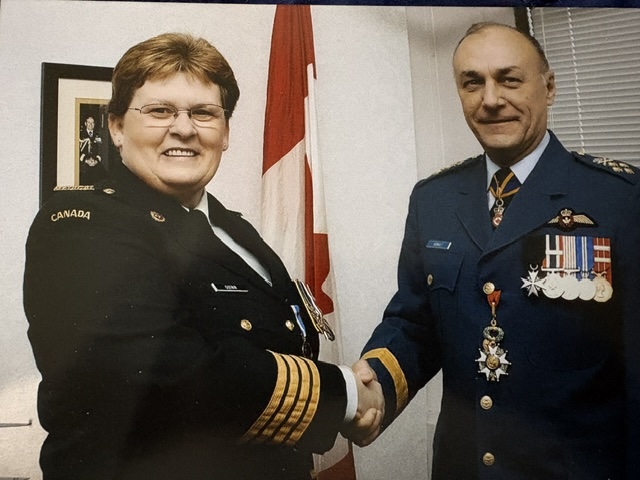
In recognition of her exemplary service, Colonel Quinn was appointed an Officer of the Order of Military Merit. She was invested as a Member of the Most Venerable Order of the Hospital of St John of Jerusalem and has received the Service Medal of the Order. She holds the Canadian Forces Decoration with three bars recognizing more than 42 years of service. Her commendations include an Assistant Deputy Minister (Military Human Resources) Commendation, and Mobile Command Achievement Awards at formation and Army Command levels. The CIOMR awarded her its Pro-Meritis Medal for exceptional service.
Every patient, be they soldier or civilian, deserves the best care we can possibly provide them. So do your best, teach others to give their best, and strive for the best possible outcomes. Always.
Retirement from the Canadian Armed Forces did not end Colonel Quinn’s contribution to health services and emergency preparedness. Beginning in 2007, she worked with the Public Health Agency of Canada on the development of a deployable field hospital capability for its Health Emergency Response Teams. The project included recruiting and field-training clinical personnel, developing equipment requirements, writing policies and procedures, and conducting a large-scale field exercise to demonstrate the concept. She subsequently continued to provide expertise in emergency preparedness, disaster-response exercises and health-services evaluation. Marcia continues to serve the veteran community as a Board Member of The Friends of the Colonel Belcher Society (FOCBS); a volunteer-driven organization dedicated to enriching the lives of Veterans residing in the Carewest Colonel Belcher.
Colonel Marcia Quinn’s career illustrates the breadth of leadership possible for contemporary military nurses. Beginning as a clinical nurse and Reserve Nursing Officer, she went on to command military medical units, lead a Canadian Army brigade, oversee the transformation of the Canadian Forces Health Services Reserve and represent Canadian military medicine at the international level. Her selection to command 41 Canadian Brigade Group remains an important milestone in Canadian military history, but equally significant is the professional path that brought her there: that of a nurse whose clinical experience, military service and leadership carried her from the bedside to command of an Army formation. Colonel Quinn is a trailblazer in the heritage of Military Nursing in Canada.