Founding President of the Overseas Nurses’ Association1
Service Summary
Rank
Major
Service
Canadian Army Medical Corps
Canadian Women’s Army Corps
Conflicts
First World War
Second World War
Years of Service
1914–1918; 1941–1944
Honours & Awards
Dame of Grace, The Most Venerable Order of the Hospital of St. John of Jerusalem; 1914-15 Star; British War Medal; Victory Medal; Canadian Volunteer Service Medal; King George VI Coronation Medal; Queen Elizabeth II Coronation Medal
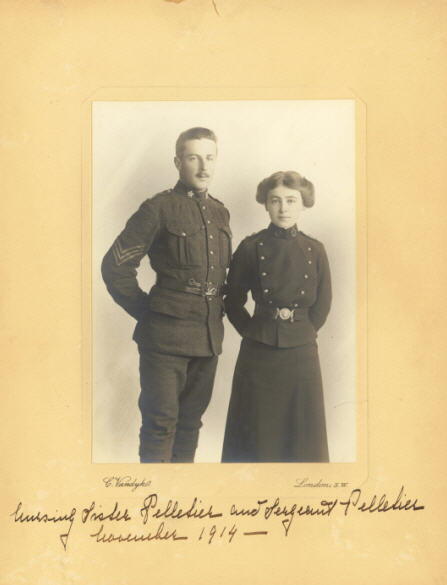
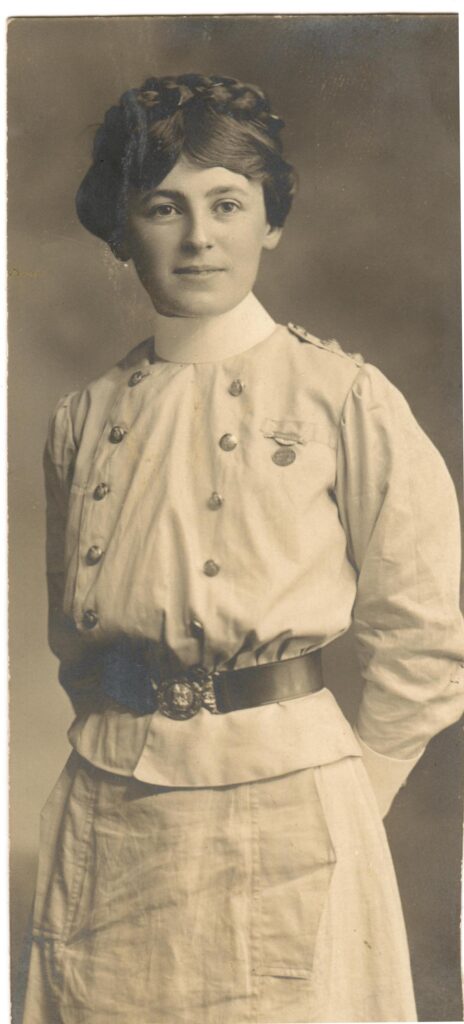
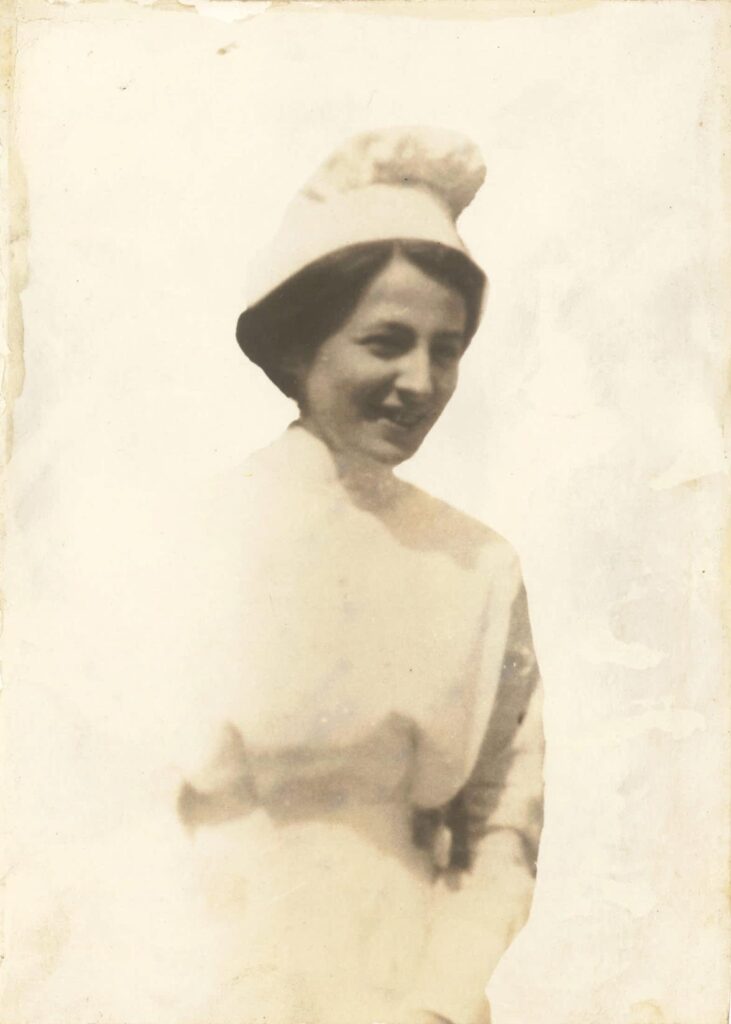
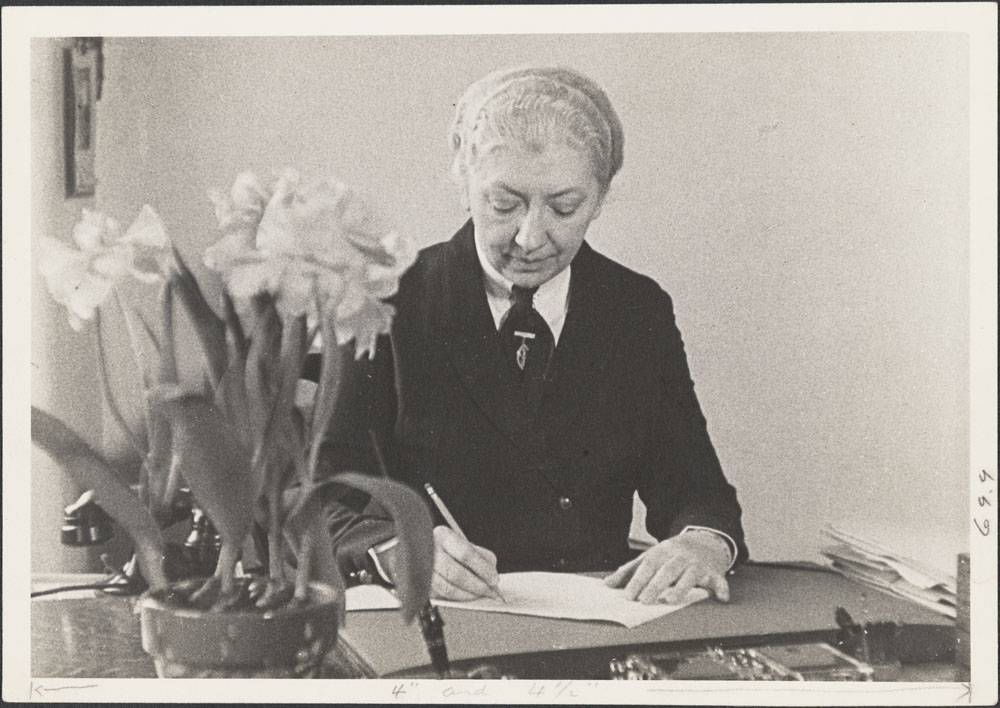
Anne Marie Juliette Pelletier was born in Quebec City, the daughter of Colonel Oscar Pelletier and Alice Archer, and the granddaughter of Sir Charles-Alphonse-Pantaléon Pelletier, Lieutenant Governor of Quebec from 1908 to 1911. Educated at the Sillery Convent before graduating from the Montreal General Hospital School of Nursing in 1914, she enlisted as one of Canada’s first Nursing Sisters with the First Canadian Contingent in September of that year.
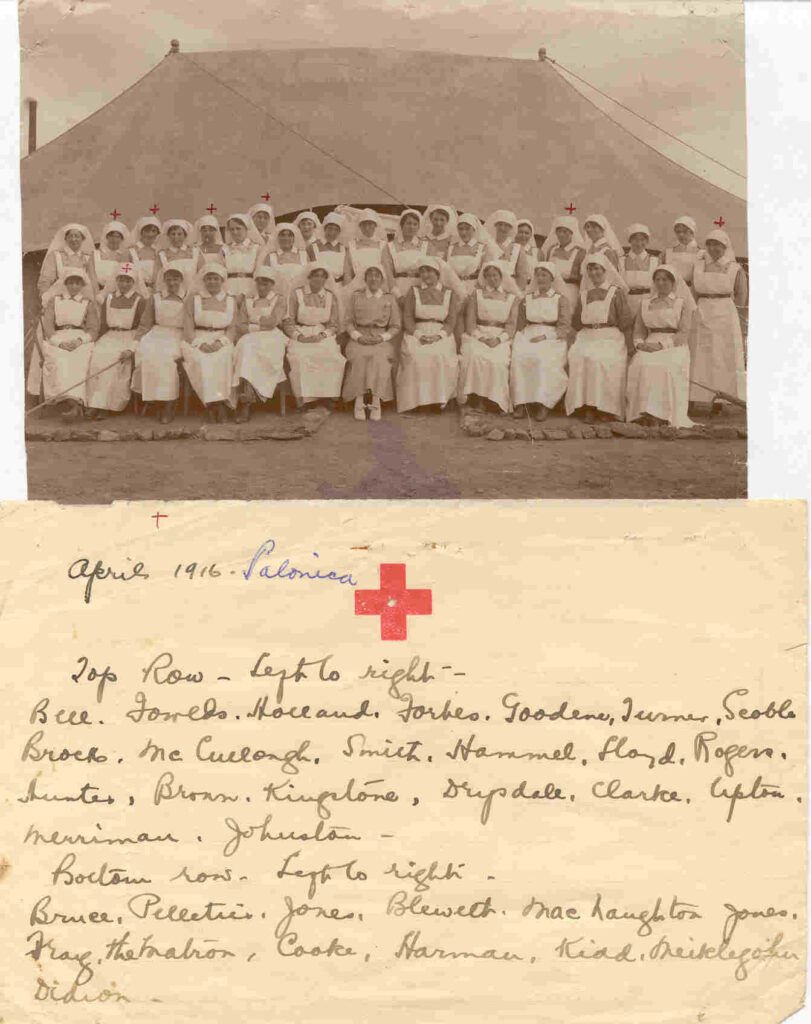
Serving overseas throughout the First World War, Juliette cared for wounded soldiers in France before serving with Canadian and British hospitals supporting the Dardanelles and Balkan campaigns. She later served in England before returning to Canada, where she concluded the war as Matron of the Valcartier Military Hospital.
In 1919, shortly after the war, Juliette travelled to Bombay (Mumbai) India to marry her fiancé, Captain Dr. G.A. Stuart Ramsey who was seconded to the Indian Medical Service. The couple settled in Montreal in 1923, where they raised a family and Juliette devoted herself to military, civic and charitable leadership.
Recognizing the importance of maintaining the bonds forged during wartime service, Juliette organized and became the first Dominion President of the Overseas Nurses’ Association of Canada, the organization that would later become the Nursing Sisters Association of Canada. She also served as Chairman of the Women’s Division of the Last Post Fund, held executive positions with the Association of Canadian Clubs, and was elected President of the Women’s Canadian Club of Montreal. A founding executive member of the Quebec Music Festival, she also served as Commandant of Auxiliary Services for the Montreal Branch of the Canadian Red Cross at the outbreak of the Second World War.
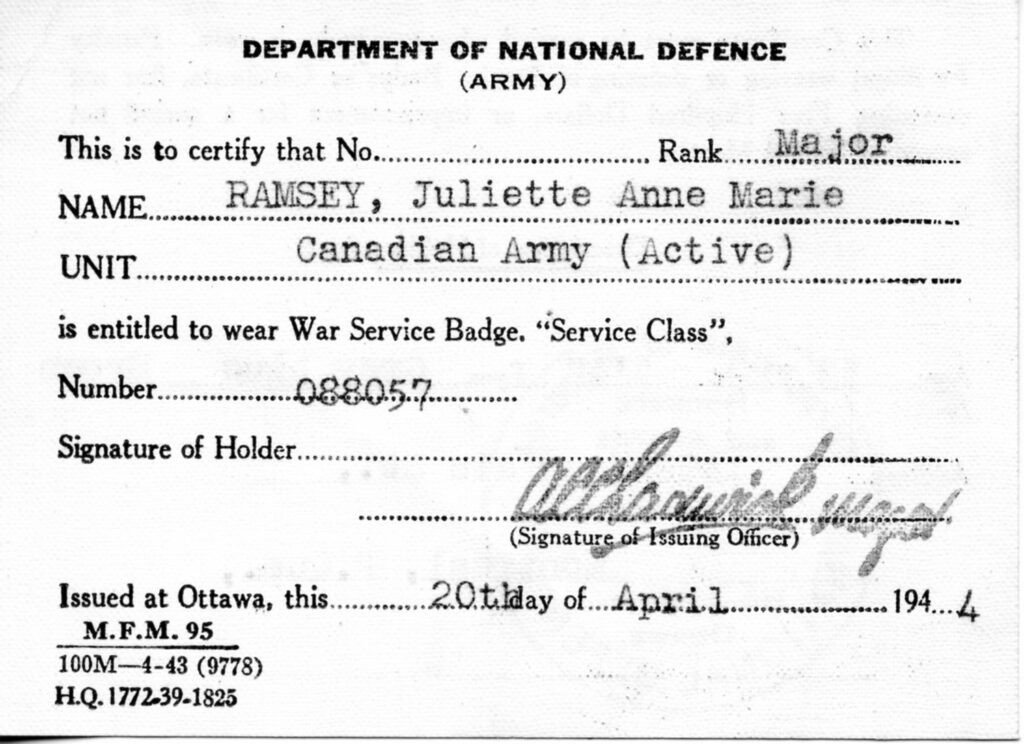
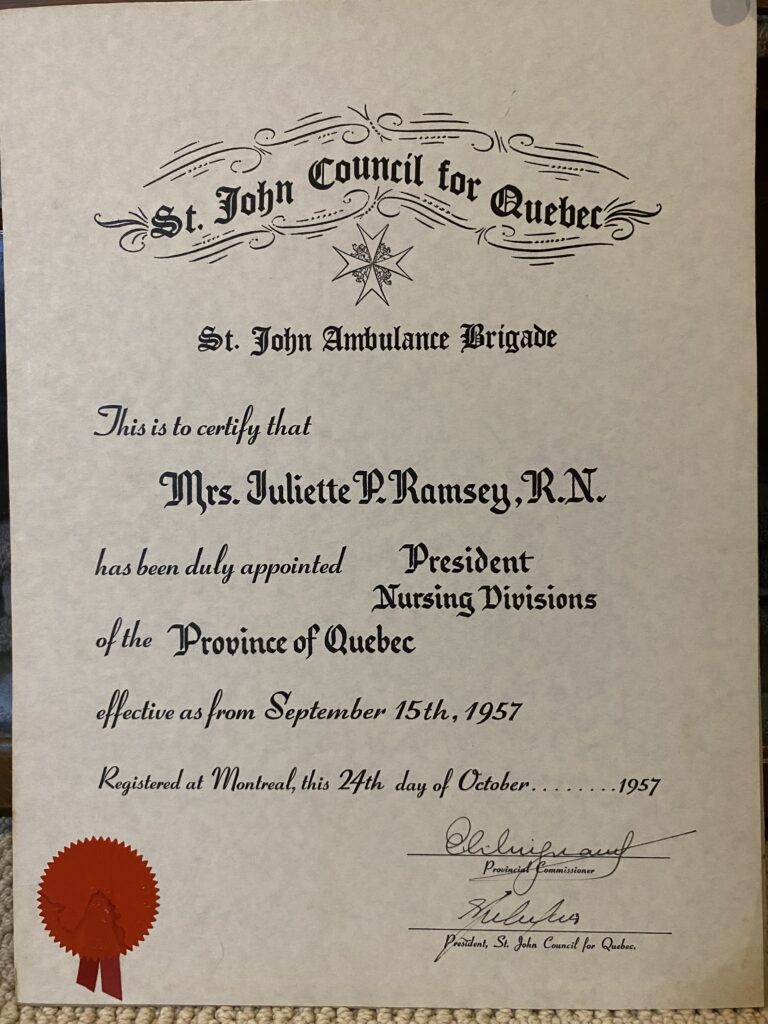
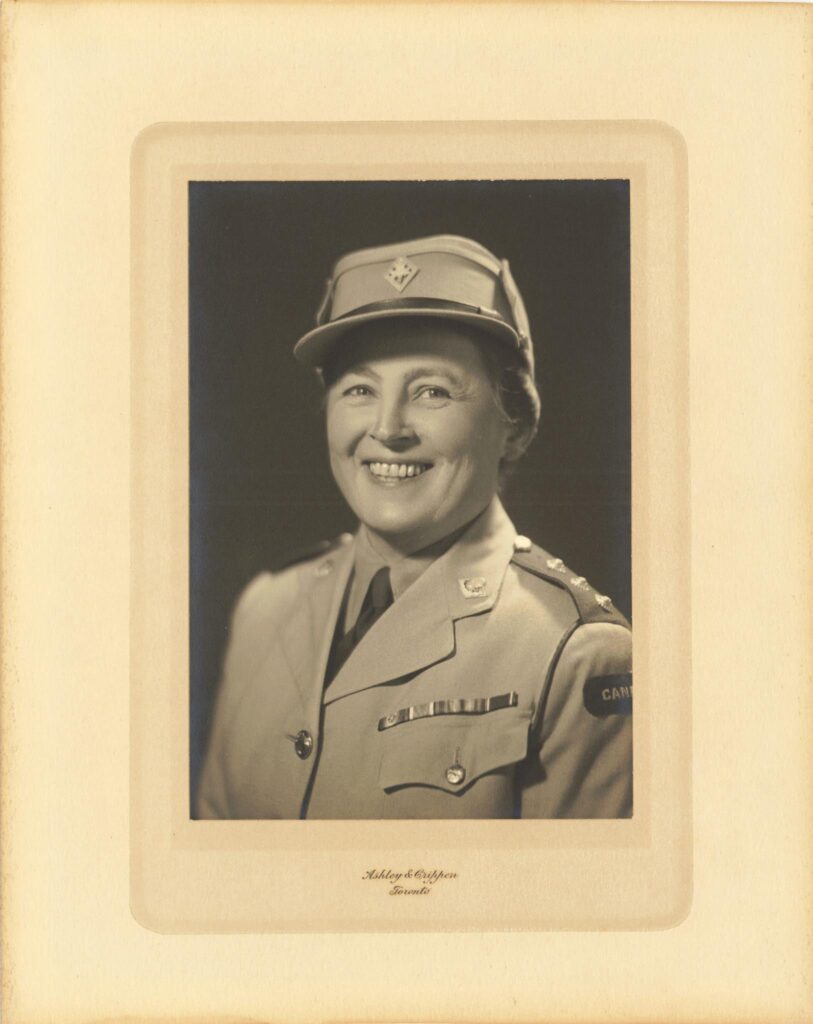
In 1941, while serving as President of the St. John Ambulance Brigade Nursing Divisions, Juliette answered the call to military service once again. Commissioned in the Canadian Women’s Army Corps, she helped organize the Corps in the Province of Quebec, serving as an instructor, assistant commandant and later recruiter before retiring in 1944 with the rank of Major.
Following the war, Juliette continued her lifelong commitment to public service through the Canadian National Institute for the Blind and St. John Ambulance. In recognition of her exceptional contributions, she was invested as a Dame of Grace of the Most Venerable Order of the Hospital of St. John of Jerusalem in 1960 and served as Honorary Provincial President of the St. John Ambulance Women’s Auxiliary in Quebec. A St. John Ambulance Brigade Division was named in her honour, and “Ramsey House,” a residence dedicated to the rehabilitation and training of visually impaired women in Montreal, also bore her name.
Major Anne Marie Juliette Pelletier Ramsey died in Montreal on 12 June 1970, leaving a legacy of military nursing, veteran leadership and community service that spanned more than half a century.
Research Note: This profile has been compiled from a combination of official military service records, Library and Archives Canada holdings, Veterans Affairs Canada records, published historical sources, newspaper accounts, and, where available, family records and photographs. The Military Nurses Association of Canada gratefully acknowledges the assistance of family members who have shared information and images.
Later became the Nursing Sisters Association of Canada and then Military Nurses Association of Canada. ↩︎
Colonel Elizabeth Lawrie Smellie, CBE, RRC
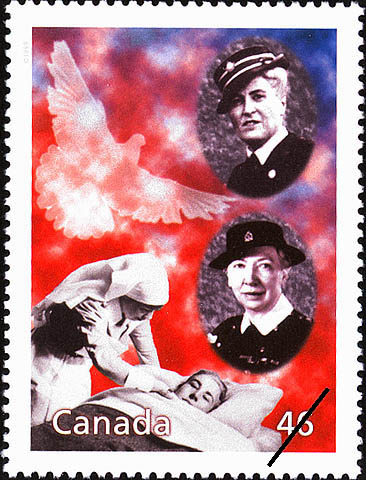
Colonel Elizabeth Lawrie Smellie, CBE, RRC (22 March 1884 – 5 March 1968) was one of the most influential figures in the history of Canadian military nursing. A veteran of both the First and Second World Wars, she served as Matron-in-Chief of the Royal Canadian Army Medical Corps during the Second World War and, in 1944, became the first woman promoted to the rank of Colonel in the Canadian Army, a distinction widely regarded as making her the first woman in the British Commonwealth to attain that rank. Through her leadership, organizational skill, and unwavering commitment to professional nursing, she helped shape Canadian military nursing for generations.
Born in Port Arthur, Ontario (now Thunder Bay), Smellie was the daughter of physician Dr. Thomas Stuart Traill Smellie and Janet Eleanor Lawrie. After completing her education in Port Arthur, she enrolled at the prestigious Johns Hopkins Hospital School of Nursing in Baltimore, graduating in 1909. Returning to Ontario, she served as Night Superintendent at McKellar General Hospital, where she quickly earned a reputation as an outstanding nurse and administrator.
When the First World War began, Smellie volunteered for overseas service and was appointed a Nursing Sister with the Canadian Army Medical Corps in 1915. Serving in military hospitals in England and France, she distinguished herself through exceptional clinical skill and leadership. In 1917 she was awarded the Royal Red Cross (First Class), one of the highest honours bestowed upon military nurses within the British Empire. By the end of the war she had been appointed Assistant to the Matron-in-Chief, gaining invaluable experience in the administration of Canada’s growing military nursing service.
Following the war, Smellie continued to advance the nursing profession. She undertook postgraduate studies in public health nursing before joining the faculty of McGill University, where she helped educate future nursing leaders. In 1924 she became Chief Superintendent of the Victorian Order of Nurses (VON), one of the most senior nursing appointments in Canada. Over the next fifteen years she strengthened community nursing services across the country, promoted higher standards of nursing education, and expanded access to public health care in rural and remote communities.
Smellie’s expertise earned international recognition. She conducted a maternal and child welfare study for the Rockefeller Foundation and served as First Vice-President of the American Public Health Association, reflecting the high regard in which she was held by colleagues across North America. In recognition of her exceptional contributions to nursing and public health, she was appointed a Commander of the Order of the British Empire (CBE) in 1934. In 1938, the Canadian Nurses Association awarded her the Mary Agnes Snively Medal, one of the profession’s highest honours, recognizing her outstanding contribution to Canadian nursing.
Voices of Service
I had the privilege of being an older woman in the Army this time and sometimes they listened to what I said.
Colonel Elizabeth L. Smellie, CBE, RRC
Matron-in-Chief, Royal Canadian Army Medical Corps
With the outbreak of the Second World War, Smellie again answered the call to military service, returning as Matron-in-Chief of the Royal Canadian Army Medical Corps. Her responsibilities were unprecedented. From a small peacetime establishment, she oversaw the expansion of the Army Nursing Service to more than 3,600 Nursing Sisters. These nursing officers served in military hospitals throughout Canada, Britain, Europe, the Mediterranean, and Asia, providing care wherever Canadian soldiers were deployed.
Her influence extended well beyond the Army Nursing Service. Smellie assisted in the development of the nursing services of the Royal Canadian Navy and the Royal Canadian Air Force, helping establish high professional standards across Canada’s military medical services. She also played a central role in the creation of the Canadian Women’s Army Corps (CWAC) in 1941. Recognizing that women could make valuable contributions in a wide range of military occupations, she helped open new opportunities for women to serve in uniform beyond traditional nursing roles, leaving a lasting impact on the evolution of women’s military service in Canada. She retired from military service later that year and returned to the Victorian Order of Nurses, guiding the organization through the transition from wartime to peacetime healthcare before retiring permanently in 1947.
Colonel Smellie’s achievements have been recognized through numerous honours and commemorations. She was designated a National Historic Person of Canada in 2011, and commemorative plaques stand in both Ottawa and Thunder Bay. Her leadership helped establish the professional standards and organizational foundations that continue to guide Canadian military nursing today.
Elizabeth Lawrie Smellie’s influence reached far beyond the hospitals in which she served. Through her leadership during two world wars, her stewardship of the Victorian Order of Nurses, and her advocacy for professional nursing, she helped shape the modern Canadian military nursing service. More than any other individual, she bridged the era of the First World War Nursing Sister and the professional military nursing officer of the post-war Canadian Armed Forces. Her legacy continues to inspire generations of Canadian military nurses committed to service, leadership, and compassionate care.
Research Note: This profile has been compiled from official military service records, Library and Archives Canada holdings, published historical sources, newspaper accounts, and other publicly available historical records.
Matron Edith Catherine Rayside, CBE, RRC, MiD
“A gifted leader, educator, and administrator, Edith Catherine Rayside helped shape Canadian military nursing during the First World War and the nursing profession that emerged in its aftermath.”
When Edith Catherine Rayside enlisted in the Canadian Army Medical Corps in February 1916, she brought with her nearly fifteen years of nursing experience, a university education, and a reputation as an accomplished hospital administrator. Those qualifications would propel her to become Canada’s Matron-in-Chief during the First World War, responsible for overseeing military nursing services across the country at a critical period in Canadian history.
Born on 26 January 1872 at Martintown, Ontario, Rayside earned a Bachelor of Arts from Queen’s University before graduating from the St. Luke’s Hospital School of Nursing in Ottawa in 1901. At a time when relatively few women attended university, she combined academic achievement with professional nursing education, establishing a foundation for a career that would span clinical practice, public health, education, and administration.
Before the First World War, Rayside’s career was anything but ordinary. She worked in private nursing, served as a public health nurse in Ottawa, and later became a district nurse in rural Saskatchewan. In 1908 she accepted the position of Superintendent of Nurses at the modern hospital operated by the Peñoles Mining Company in Mapimí, Mexico. Living through the political unrest of the Mexican Revolution, she gained valuable experience managing hospital operations under challenging conditions before returning to Canada in 1914.
Recognizing her exceptional administrative abilities, the Canadian Army Medical Corps commissioned Rayside as a Nursing Sister on 4 February 1916. Rather than serving as a junior nurse, she was immediately appointed one of only two matrons responsible for the nursing services of No. 2 Canadian General Hospital at Le Tréport, France. The hospital, with more than 1,000 beds, treated thousands of wounded and sick soldiers from the Western Front. There, Rayside supervised approximately seventy Nursing Sisters while ensuring the highest standards of patient care under wartime conditions.
Although she rarely wrote about herself, one surviving letter offers a glimpse into the realities faced by Canada’s Nursing Sisters. Describing the wounded arriving from the front, she wrote that their injuries were “too awful for words.” Yet, despite strict military discipline, she admitted to quietly giving Canadian patients “little favors on the Q.T.”—a reminder that compassion remained at the heart of military nursing even amid the horrors of war.
Rayside’s abilities soon attracted the attention of senior medical leadership. She was appointed Matron at Moore Barracks Hospital in Shorncliffe, England, before being assigned to the office of the Director General of Medical Services in London. On 11 September 1917 she returned to Canada to assume the appointment of temporary Matron-in-Chief at Militia Headquarters in Ottawa. In that role, she supervised nursing services in more than sixty Canadian military hospitals, managed the selection and posting of Nursing Sisters for overseas service, and helped direct military nursing during the influenza pandemic of 1918–1919.
Her distinguished wartime service earned significant recognition. She was Mentioned in Dispatches, received the Royal Red Cross (First Class) for exceptional nursing service, and was later appointed a Commander of the Order of the British Empire (CBE) in recognition of her lifelong contributions to nursing and public service.
Following the war, Rayside continued to influence Canadian nursing. After completing advanced studies in nursing education at Columbia University in New York, she helped modernize nursing education at the Montreal General Hospital and later served as Superintendent of Nurses at Hamilton General Hospital. She remained active in numerous professional organizations, including the Canadian Nurses Association and the Overseas Nursing Sisters’ Association of Canada, mentoring future nursing leaders and advocating for higher standards in nursing education and practice.
Edith Catherine Rayside retired to her family home in Martintown, Ontario, where she died on 20 December 1950 at the age of seventy-eight.
Today, Edith Catherine Rayside is remembered not only for her distinguished military service but also for her lasting influence on Canadian nursing. As Matron-in-Chief during one of Canada’s greatest national challenges, she demonstrated that military nursing required not only clinical excellence, but also leadership, organization, and unwavering dedication to those in need. Her career remains an enduring example of the professionalism and service that continue to define Canada’s military nurses.
Research Note: This profile has been compiled from official military service records, Library and Archives Canada holdings, published historical sources, newspaper accounts, and other publicly available historical records.
Nursing Sister Rena Maude MacLean, RRC
Rena Maude McLean (14 June 1879 – 27 June 1918) was among the first Canadian Nursing Sisters to volunteer for overseas service during the First World War. Over nearly four years she served in Canada, England, France, and Greece, caring for wounded soldiers in military hospitals and aboard hospital ships. She was one of the fourteen Canadian Nursing Sisters who lost their lives when HMHS Llandovery Castle was torpedoed by a German U-boat in June 1918, an attack widely regarded as one of the war’s most infamous atrocities.
Born in Souris, Prince Edward Island, McLean was the daughter of businessman and politician John McLean and Matilda Jane Jury. Known to family and friends by the nickname “Bird,” she attended Mount Allison Ladies’ Collegebefore graduating from Halifax Ladies’ College in 1896. She completed her nursing education at Newport Hospital in Newport, Rhode Island, graduating in 1908, and later became head operating room nurse at Henry Heywood Memorial Hospital in Gardner, Massachusetts.
McLean was appointed to the Canadian Army Medical Corps as a Nursing Sister on 28 September 1914, only weeks after the outbreak of war. She sailed for England the following month and, in November, joined No. 2 Canadian Stationary Hospital in France. At Le Touquet she was among the thirty-five Canadian nurses who transformed a luxury hotel into the first hospital in France staffed entirely by Canadians. During the aftermath of the Second Battle of Ypres in 1915, the hospital received hundreds of soldiers suffering the effects of chlorine gas.
Her wartime service took her to a remarkable variety of postings. She served briefly with No. 12 British Stationary Hospital at Rouen before transferring to the Duchess of Connaught’s Canadian Red Cross Hospital at Taplow, England. In 1916 she began transport duty, escorting wounded soldiers between Britain and Canada aboard hospital and troop ships. Later that year she was posted to No. 1 Canadian Stationary Hospital at Salonika, Greece, before returning to England when Canadian nursing personnel were withdrawn from the Mediterranean theatre. She subsequently served at No. 16 Canadian General Hospital at Orpington and, in early 1918, aboard the hospital ship HMHS Araguaya.
Despite years of demanding service, MacLean remained optimistic. In her final surviving letter written aboard Llandovery Castle on 16 June 1918, she wrote:
Voices of Service
Here we are once more approaching Halifax, but still as far from home as ever… This trip more than half our patients are amputation cases and would make you heartsick only they are so cheerful and happy themselves… This may be my last trip over and, if it is, that means that I don’t get home until dear knows when, for as soon as I get to England I am going to put in for France and once there it will be hard enough to get away.
In March 1918 McLean joined HMHS Llandovery Castle, which carried wounded Canadian soldiers across the Atlantic. During the return voyage to England, the ship was torpedoed by German submarine U-86 off the coast of Ireland on 27 June 1918. The vessel sank rapidly, and all fourteen Canadian Nursing Sisters aboard lost their lives. Their deaths became a powerful symbol of the sacrifice and courage of Canada’s military nurses.
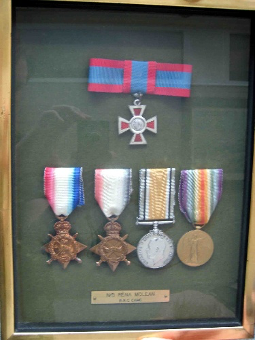
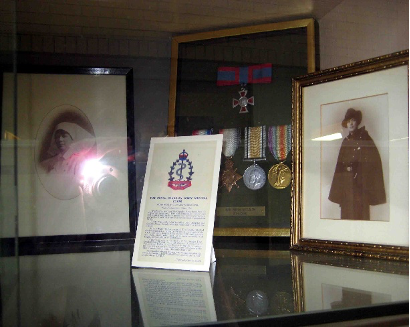
Rena McLean’s memory has been honoured in numerous ways. Memorial plaques commemorate her in St. James United Church in Souris, at Mount Allison University, and at the Queen Elizabeth Hospital in Charlottetown. A veterans’ hospital established in Charlottetown in 1919 bore her name, and today the Rena McLean Veterans Garden marks the site where that hospital once stood. Her name is also inscribed among more than 3,000 women of the British Empire commemorated in the Five Sisters Window at York Minster, England. Within the Canadian Armed Forces, the Llandovery Castle Award, presented annually to an outstanding Nursing Officer, continues to honour the legacy of McLean and her fellow Nursing Sisters who made the ultimate sacrifice. Rena Maude McLean’s medals are held by the Borden Memorial Museum and Archives at Canadian Forces Base Borden, ON. They were placed there by Dr Gustave Gingras following the death of his wife, Rena M. MacLean Gingras, Rena’s niece.
Margaret Isobel Bartlett was born on May 5, 1918, in Dunnville, Ontario, to parents May and Herbert Bartlett. She was raised along with her older brother Harry on a large dairy farm where by age five she was responsible for feeding the chickens and collecting the eggs. At age 18 she started nursing school at the Toronto Western Hospital and after graduation took a position on the maternity ward at The Columbia Presbyterian Medical Center in New York City. While living in New York, she met a dashing young British pilot who was on holiday in New York after training with the Canadian Air Force. When Margaret tried to join the Canadian Army to work overseas during WWII, she was turned down because of her young age so she promptly volunteered with the Red Cross and soon found herself on a convoy sailing to the UK. After docking in Britain, however, she was met by her boyfriend’s family with the devastating news that he had been killed during a bombing mission. The next day she accompanied his family walking his remains in a wheelbarrow through a small English town to the church for burial.
While on the ship, Margaret had been put in charge of two girls who were returning to London after being sent to Canada by their parents at the beginning of the war. A few weeks later, she was invited to spend a weekend with the girls and their family. It turns out that their father was Sir Edward Peacock, Director of the Bank of England, who after hearing about Margaret’s wish to join the Canadian army, quickly made it so. Margaret soon found herself in uniform and part of a field hospital unit that kept close to the front line caring for the wounded. By the end of WWII, she was in Germany with the horrific task of emptying war camps of survivors.
Margaret met her husband, David Guildford, during the war on a blind date in the UK. David spent most of the war in Italy but they would meet up in England where he was usually found playing piano at a “Tea Dance” and Margaret would be dancing – she could apparently cut quite a rug. She was known to catch a ride on an empty bomber to meet David and he would drive his motorcycle a long way to meet her. One day, he tracked her down at a German estate the army had taken over as a field hospital. He took her out on a lake in a small rowboat and proposed… she claims she said yes as she didn’t know how to swim.
After their eventual return to Canada, they settled in David’s home city of Halifax and had four children – Margo, Bart, Stephanie and Elizabeth. Margo and Bart developed what is now known as Spinal Muscular Atrophy and Margaret cared for them herself for 30 years before eventually moving them into care at a nursing home. Margaret and David never made their family feel different from any other, taking long summer trips to Ontario in the Buick with two adults, four kids, a dog and two wheelchairs… often camping along the way. After Bart died in 1980, Margaret went back to nursing, eventually becoming a hospice nurse. She spent many years helping patients and their families deal with death and became a vital part of many homes.
David and Margaret built their dream home “Endomor”, in St Margaret’s Bay in 1983. When David died just a year later at age 63, Margaret opened her home up as a B&B for ten years paying off the mortgage and making new friends from all over the world. She spent 35 years enjoying the beauty of the seasons in St Margaret’s Bay, keeping daily journals of the weather, hosting the St Margaret’s Bay Coffee Club and of course…bridge games! Over the years, grandchildren and great-grandchildren came along, and Margaret became affectionately known to many as Gran. Her beloved home was the center of family birthdays, events, and celebrations, and many summer days spent swimming in the ocean. Gran always believed that a swim in salt water could cure anything.
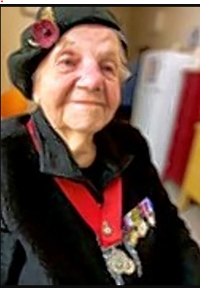
At 98 years of age, Margaret decided to move to Camp Hill Veterans Hospital where she had volunteered for many years. She enjoyed the comradery of her fellow veterans and never tired of instructing nursing students how to fold hospital corners when making up the bed! The Veteran’s Memorial Garden was a favourite place where she spent many hours. She has been the recipient of many medals and awards for her dedicated service to her country and fellow veterans, including the Queen Elizabeth II’s Golden Jubilee Medal (2002) and Diamond Jubilee Medal (2012). Over the years, Margaret made pilgrimages to Vimy and other significant battle sites in memory and celebration of those who fought for our freedom. She was a dedicated member of the Nursing Sisters Association of Nova Scotia, including serving as President. At 100 years old, she was knighted and made a Dame of the Order of Saint George, Grand Priory of Canada. Margaret died in 2023 aged 105.
Nursing Sister Margaret GuildfordNursing Sister ‘Dame’ Margaret Guildford
Lieutenant Roy D. Field
When Canadians think of military nursing during the twentieth century, they usually picture the Nursing Sisters of the First and Second World Wars. For more than sixty years, commissioned Nursing Officers in Canada’s military were exclusively women.
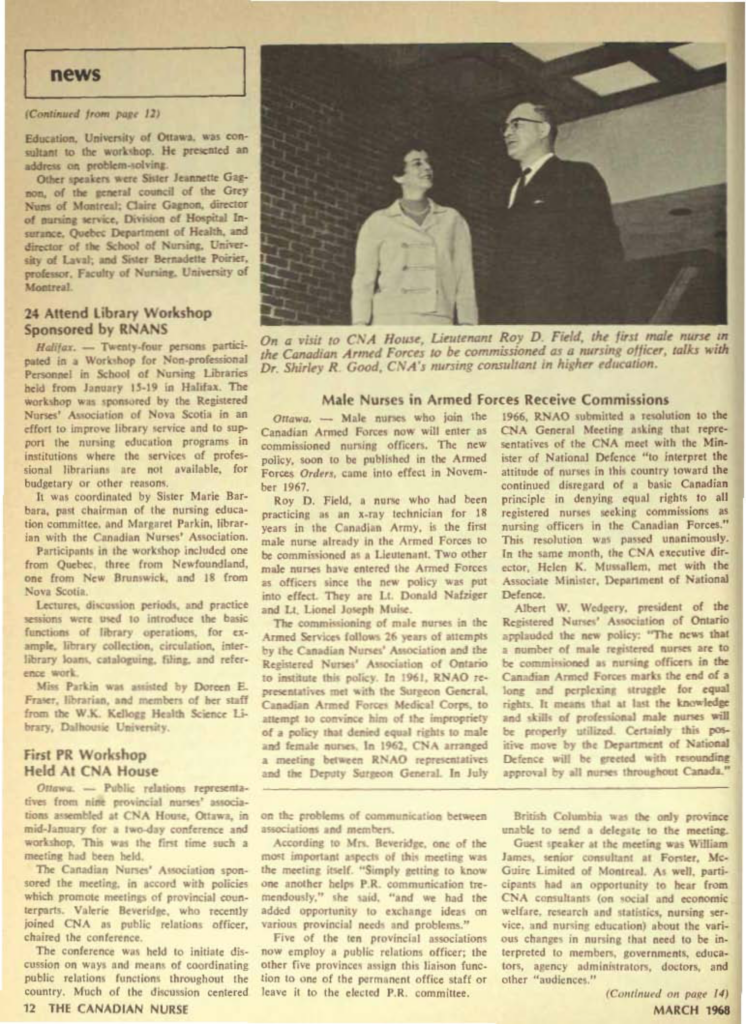
That changed in November 1967, when the Canadian Armed Forces commissioned Lieutenant Roy D. Field as the first male Nursing Officer. Field had served for eighteen years as an Army X-Ray Technician, although he was a qualified registered nurse, and became the first man to receive a commission as a Nursing Officer. Roy grew up in Parrsboro, NS and graduated from the Nova Scotia Hospital nursing program where he met his future wife Alice Crowell. He joined the Canadian Armed Forces and served for 25 years across Canada before retiring to Diligent River where he and Alice ran greenhouses. He was also Hospital Administrator at South Cumberland memorial Hospital. Roy died in 2023.
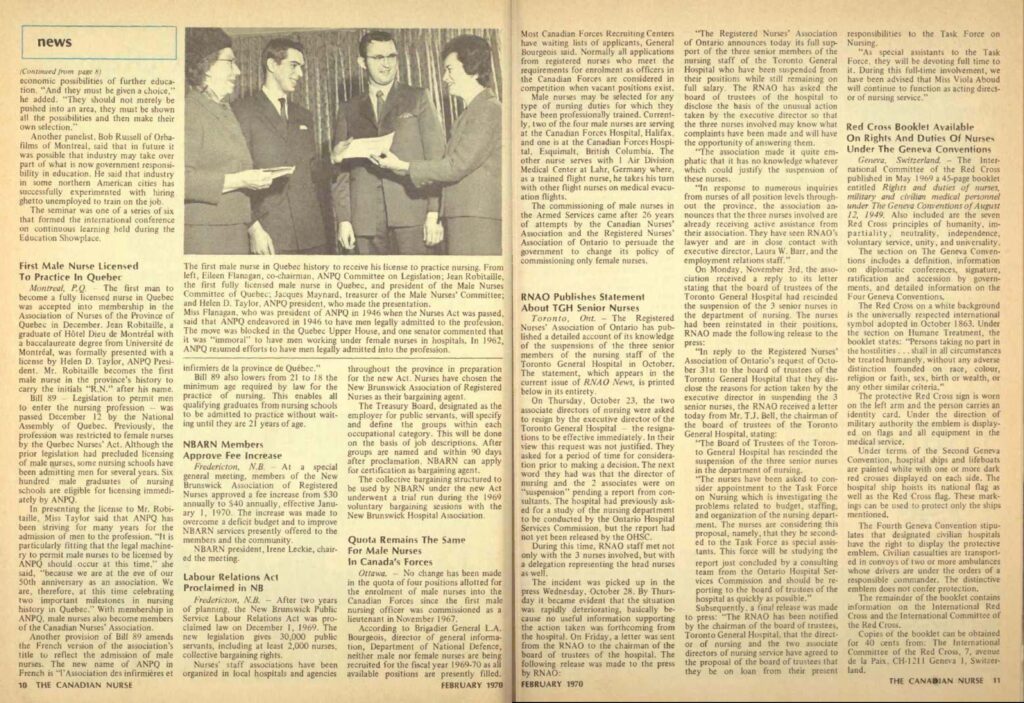
Shortly after his own commissioning, Roy was soon joined by Lieutenant Donald Nafziger and Lieutenant Lionel Joseph Muise, forming the nucleus of a new generation men in Canadian military nursing whose biograpical footprints are scant. By 1965, Lionel Joseph Muise was employed as a nurse at the Victoria General Hospital in Halifax and resided in the hospital’s male residence before joining the Canadian Armed Forces. By early 1970, the Canadian Armed Forces had established four positions for male Nursing Officers, all of which had been filled, marking the successful integration of men into the commissioned nursing profession. Two were employed at Canadian Forces Hospital Halifax, two in Esquimalt, BC, and one at the 1 Air Division Medical centre in Lahr, Germany who was also an aeromedical evacuation flight nurse.
The decision to commission men as nursing officers followed years of advocacy by the Canadian Nurses Association and the Registered Nurses Association of Ontario. It reflected changing attitudes toward nursing as a profession. Until 1967, men could serve in military medical occupations, but were not eligible to receive commissions as Nursing Officers. The commissioning of these four pioneers ended a long-standing barrier and demonstrated that professional nursing in the Canadian Armed Forces would be based on qualifications rather than gender.
Today, male Nursing Officers serve throughout the Canadian Armed Forces in clinical, leadership, education, operational, and deployed roles. Their service traces directly to the determination of these first four officers, whose commissioning marked a significant step in the evolution of Canadian military nursing.
Did you Know?
1967 marked the first commissioning of a male to the Nursing Officer occupation
Lieutenant Roy D. Field, was the first male commissioned to the Nursing Officer Occupation
By 1970, four of four authorized positions for men in the Nursing Occupation had been filled
The identity of the fourth member of this pioneering cohort remains the subject of ongoing historical research by the MNAC-AIIMC
Do you know more about any of the original cohort? Let us know: info@mnac-aiimc.ca.