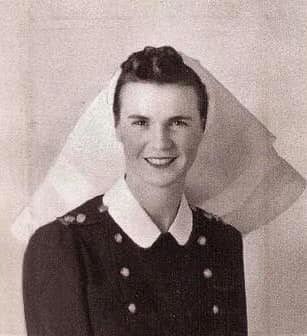
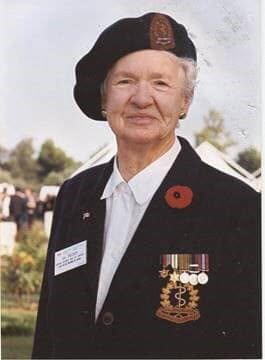
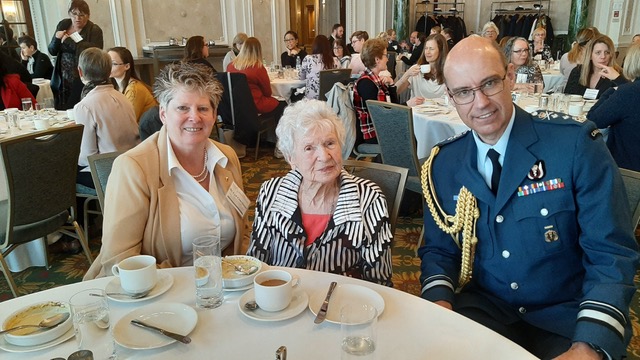
Colonel Marcia L. Quinn, OMM, MStJ, CD, built an exceptional career spanning clinical nursing, military command, health services transformation and international medical-reserve leadership. A Registered Nurse and Canadian Armed Forces (CAF) Nursing Officer, she is particularly notable as the first woman to command a Canadian Army brigade.
Marcia received her nursing education at St. Mary’s Hospital School of Nursing in Montréal. Her civilian clinical career included work as a staff nurse in adult and neonatal intensive care at St. Mary’s Hospital in Montréal, St. Joseph’s Hospital in Hamilton and Victoria Hospital in London, Ontario. Her broader nursing career included positions in college health services, occupational health, practice management and medical consulting.
She joined the Canadian Armed Forces Militia (Army Reserve) in 1972 and progressively assumed positions of increasing responsibility as a Nursing Officer. Her early military career remained firmly rooted in military health services. In 1983, at the rank of Major, she became the first Nursing Officer and the first woman to command 23 (Hamilton) Medical Company. Promoted Lieutenant-Colonel, she later commanded 15 (Edmonton) Field Ambulance from 1991-1994, gaining progressively broader command experience that would eventually take her well beyond the traditional employment of a Nursing Officer.
Quinn was the Course Commander of the Junior Officer Staff Course while a staff officer at the Militia Command and Staff School. Post-command, she was Senior Staff Officer – Administration, and Deputy Chief of Staff at 41 Canadian Brigade Group (CBG) Headquarters in Alberta. On promotion to Colonel in 1998, she was appointed the Commander 41 CBG.
Command of a brigade represented a significant achievement not only for women in the CAF, but also for a military nurse. Colonel Quinn had progressed from clinical nursing and command within the military medical system to responsibility for an Army Reserve formation comprising units from across the combat arms, combat support and combat service support. As brigade commander, she was responsible for recruiting, training and retaining personnel in support of the Canadian Army’s Land Force Western Area’s mission. Her tenure also included responses to domestic emergencies, including flooding in Medicine Hat and forest fires in northern Alberta.
In 2000, the CAF launched Rx2000, a comprehensive reform of the Medical and Dental services designed to rebuild capabilities diminished during the 1990’s and improve the quality, consistency, and operational effectiveness of military health care. The transformation reorganized the military medical and dental services into an integrated structure and consolidated command and responsibility for health care within a newly formed Canadian Forces Health Services Group. This included all former Naval Reserve, Militia, and Air Reserve medical units and personnel and formed a new Health Services Reserve. As part of this transformation Colonel Quinn returned to senior Health Services leadership as the Team Leader of the Rx 2000 Reserve Working Group and became the first Director Health Services Reserve and the Senior Reserve Advisor to the Director General Health Services/Commander Canadian Forces Health Services Group.
The task involved approximately 1,500 Health Services Reservists possessing widely differing military and professional competencies, ranging from basic first-aid qualifications to highly specialized physicians and nurses. A central objective was to develop a Reserve Health Services capability whose members could meet the standards required to augment Regular Force health services on operations in Canada and internationally. Colonel Quinn’s work included developing the structures, human-resource networks and implementation plans required to make that capability sustainable. She remained Director Health Services Reserves until 2007, when she retired from the CAF.
Her influence also extended internationally. Colonel Quinn developed relationships with allied military medical organizations. She was particularly proud of a new operational working relationship with the United States Army Medical Department that saw CFHS Reserve members participating in what became the Annual Global Medic exercises. She also became active in the Interallied Confederation of Medical Reserve Officers (CIOMR), the organization representing reserve medical officers within the wider NATO reserve community. From 2004 to 2006, she served as International President of CIOMR. Her international work included presentations on Canada’s use of Health Services reservists and participation in discussions concerning NATO reserve medical capabilities and homeland defence.
In recognition of her exemplary service, Colonel Quinn was appointed an Officer of the Order of Military Merit. She was invested as a Member of the Most Venerable Order of the Hospital of St John of Jerusalem and has received the Service Medal of the Order. She holds the Canadian Forces Decoration with two bars recognizing more than 32 years of service. Her commendations include an Assistant Deputy Minister (Military Human Resources) Commendation, and Mobile Command Achievement Awards at formation and Army Command levels. The CIOMR awarded her its Pro-Meritis Medal for exceptional service.
Retirement from the Canadian Armed Forces did not end Colonel Quinn’s contribution to health services and emergency preparedness. Beginning in 2007, she worked with the Public Health Agency of Canada on the development of a deployable field hospital capability for its Health Emergency Response Teams. The project included recruiting and field-training clinical personnel, developing equipment requirements, writing policies and procedures, and conducting a large-scale field exercise to demonstrate the concept. She subsequently continued to provide expertise in emergency preparedness, disaster-response exercises and health-services evaluation.
Colonel Marcia Quinn’s career illustrates the breadth of leadership possible for contemporary military nurses. Beginning as a clinical nurse and Reserve Nursing Officer, she went on to command military medical units, lead a Canadian Army brigade, oversee the transformation of the Canadian Forces Health Services Reserve and represent Canadian military medicine at the international level. Her selection to command 41 Canadian Brigade Group remains an important milestone in Canadian military history, but equally significant is the professional path that brought her there: that of a nurse whose clinical experience, military service and leadership carried her from the bedside to command of an Army formation. Colonel Quinn is a trailblazer in the heritage of Military Nursing in Canada.
Protected: Colonel Kristiana M. Stevens, OMM, CD
Nursing Sister Ida Crocker Reunion with her Soldier – Interment
In Memoriam
Nursing Sister Lieutenant (Ret’d) Ida Lillian Crocker
29 June 1920 – 7 June 2026
Lest We Forget | N’oublions jamais
The Military Nurses Association of Canada / Association des infirmières et infirmiers militaires du Canada
honours the life and service of Nursing Sister Lieutenant (Ret’d) Ida Lillian Crocker, a Second World War veteran,
longtime member of the military nursing community, and cherished friend whose legacy of duty, honour, and compassion
will continue to inspire generations. Ida was interred at Beechwood National Military Cemetery in Ottawa with her Soldier and Husband Bob, who predeceased her, on 12 September 2026.
Tribute
It is with profound sadness that we announce the passing of Nursing Sister Lieutenant (Ret’d)
Ida Lillian Crocker on June 7, 2026, in Ottawa, just shy of her 106th birthday.
Ida joined the Royal Canadian Army Medical Corps in 1941 and served with distinction during
the Second World War in England and Italy, providing skilled and compassionate care to those
serving their country. Her dedication, courage, and unwavering sense of duty reflected the
very best traditions of the Nursing Sisters and the Canadian Armed Forces.
A longtime member of the Nursing Sisters Association of Canada and a cherished member of the
military nursing community, Ida remained respected and admired throughout her life. She was
a living link to an extraordinary generation whose service and sacrifice helped shape our nation.
We hold many wonderful memories of dear Ida, who attended NSAC–Ottawa Unit luncheons regularly
until the onset of the pandemic. Over the years, she remained closely connected to the Association,
supporting Nursing Sisters and Nursing Officers, and was supported in return by many devoted
friends and colleagues.
She was visited regularly by her dear friends Beth Davis and Colonel (Ret’d) Marielle Gagné.
Gail Harrod, Jeanne Jutras, Nicole Lachance, and Colonel (Ret’d) Gisèle Fontaine, in their roles
as Comfort and Friendship Coordinators, had the privilege of providing ongoing support to Ida.
We offer special thanks to Past President Lieutenant-Colonel (Ret’d) Shelley Gosselin, who
provided exceptional care, companionship, and advocacy for Ida over many years. Shelley developed
a truly special bond with Ida, calling or visiting whenever feasible, often bringing healthy
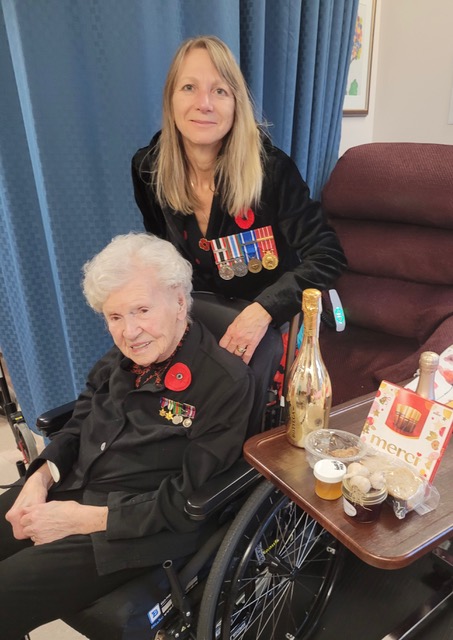
treats, tea, and, on occasion, a little bubbly.
There were many memorable occasions that brought us together with Ida in recent years: her
Quilt of Valour presentation in April 2019; the Veterans Affairs Canada Year of the Nurse
luncheon at the Château Laurier on March 12, 2020; pandemic Zoom gatherings; and the celebration
of her 105th birthday, hosted by MNAC.
It was remarkable to witness how, even at 105, Ida could vividly share her personal and wartime
experiences: stories of courage, resilience, compassion, family, and service to country. She was
a truly exceptional woman whose grace, warmth, and strength touched all who had the privilege
of knowing her.
We extend our heartfelt condolences to Ida’s family, friends, fellow Nursing Sisters, Nursing
Officers, and all who knew and loved her. May she rest in peace, and may her memory remain a
source of comfort, pride, and inspiration.
Hommage
C’est avec une profonde tristesse que nous annonçons le décès de la lieutenante infirmière
retraitée Ida Lillian Crocker, survenu le 7 juin 2026 à Ottawa, peu avant son 106e anniversaire.
Ida s’est enrôlée dans le Corps de santé royal canadien en 1941 et a servi avec distinction
durant la Seconde Guerre mondiale en Angleterre et en Italie, prodiguant des soins compétents
et empreints de compassion à ceux et celles qui servaient leur pays. Son dévouement, son courage
et son sens inébranlable du devoir incarnaient les plus hautes traditions des Infirmières
militaires et des Forces armées canadiennes.
Membre de longue date de l’Association des infirmières militaires du Canada et membre chérie
de la communauté des infirmières et infirmiers militaires, Ida est demeurée respectée et admirée
tout au long de sa vie. Elle représentait un précieux lien vivant avec une génération
exceptionnelle dont le service et les sacrifices ont contribué à façonner notre nation.
Nous conservons de nombreux et précieux souvenirs de notre chère Ida, qui a participé
régulièrement aux dîners de l’AIMC–Ottawa jusqu’au début de la pandémie. Au fil des années,
elle est demeurée étroitement liée à l’Association, soutenant ses collègues, et bénéficiant
en retour du soutien de nombreux amis et collègues dévoués.
Elle recevait régulièrement la visite de ses grandes amies Beth Davis et la colonelle retraitée
Marielle Gagné. Gail Harrod, Jeanne Jutras, Nicole Lachance et la colonelle retraitée Gisèle
Fontaine, dans leurs rôles de coordonnatrices du programme Confort et Amitié, ont eu le privilège
de lui offrir un soutien continu.
Nous offrons des remerciements particuliers à l’ancienne présidente, la lieutenante-colonelle
retraitée Shelley Gosselin, qui a fait preuve d’un dévouement, d’une bienveillance et d’un
soutien exceptionnels envers Ida pendant de nombreuses années. Shelley a développé avec elle
un lien véritablement spécial, lui téléphonant ou lui rendant visite lorsque les circonstances
le permettaient.
Au fil des années récentes, de nombreuses occasions mémorables nous ont réunis autour d’Ida :
la présentation de sa Courtepointe de la vaillance en avril 2019; le déjeuner des infirmières
et infirmiers d’Anciens Combattants Canada au Château Laurier le 12 mars 2020; les rencontres
Zoom pendant la pandémie; et la célébration de son 105e anniversaire, organisée par l’AIIMC.
Il était remarquable de constater qu’à 105 ans, Ida pouvait encore raconter avec une grande
vivacité ses expériences personnelles et de guerre : des récits de courage, de résilience,
de compassion, de famille et de service envers son pays. Elle était une femme véritablement
exceptionnelle dont la grâce, la chaleur humaine et la force de caractère ont marqué tous ceux
et celles qui ont eu le privilège de la connaître.
Nous offrons nos plus sincères condoléances à la famille d’Ida, à ses amis, à ses collègues
infirmières et infirmiers militaires, ainsi qu’à toutes les personnes qui l’ont connue et aimée.
Puisse-t-elle reposer en paix, et que son souvenir demeure une source de réconfort, de fierté
et d’inspiration.
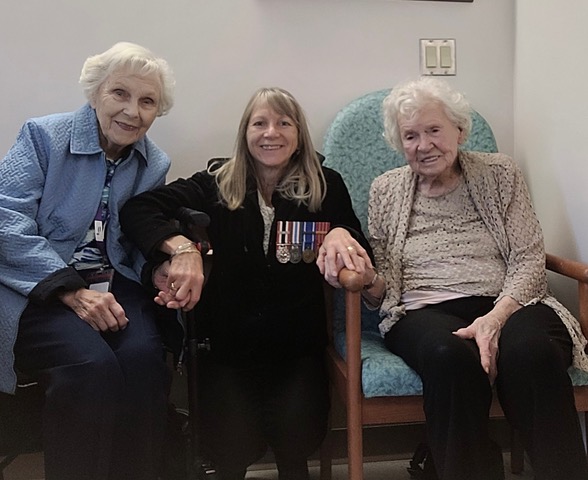
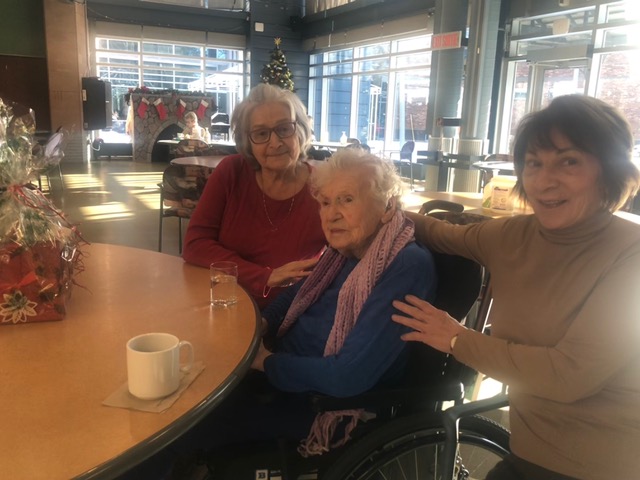
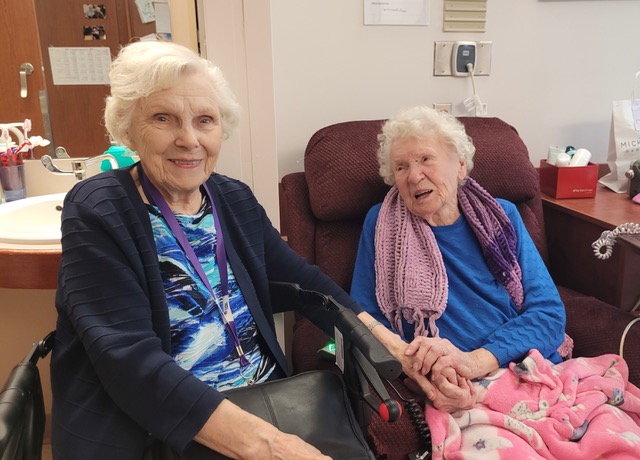
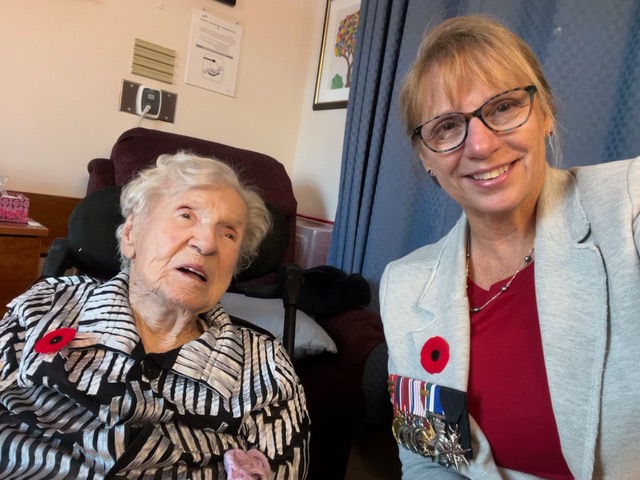
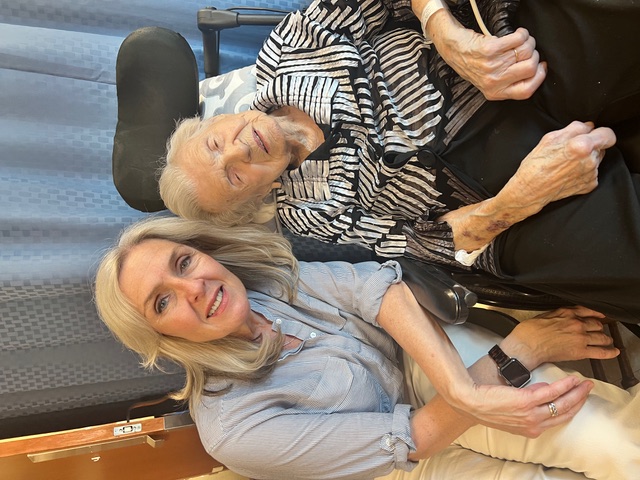
Ida Crocker, remembered with affection and gratitude.
Ida with members of the military nursing community.
Veterans Affairs Canada Year of the Nurse luncheon, Château Laurier, March 2020.
Ida attending as a guest of honour, March 2020.
Celebrating Ida’s 105th birthday.
Ida with guests at her 105th birthday celebration.
A cherished moment with Ida.
Remembering Ida’s warmth and grace.
Ida among friends and colleagues.
Honouring a lifetime of service.
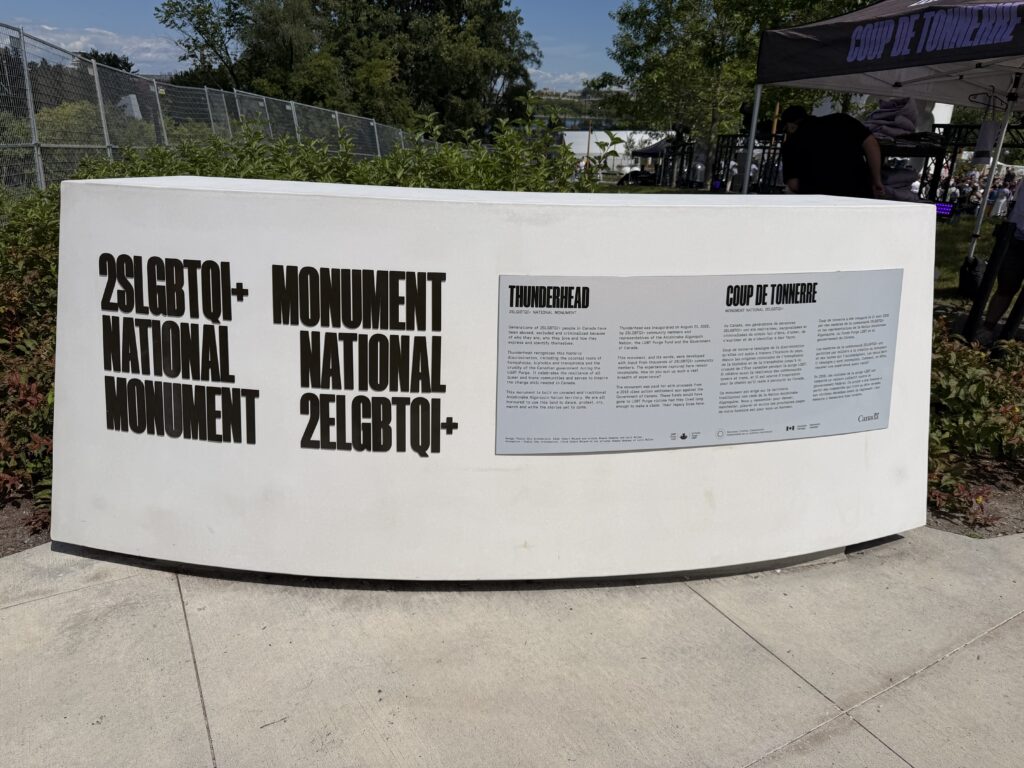
Date: 21 September 2026 Location: 201 Wellington Street, Ottawa, by Portage Bridge
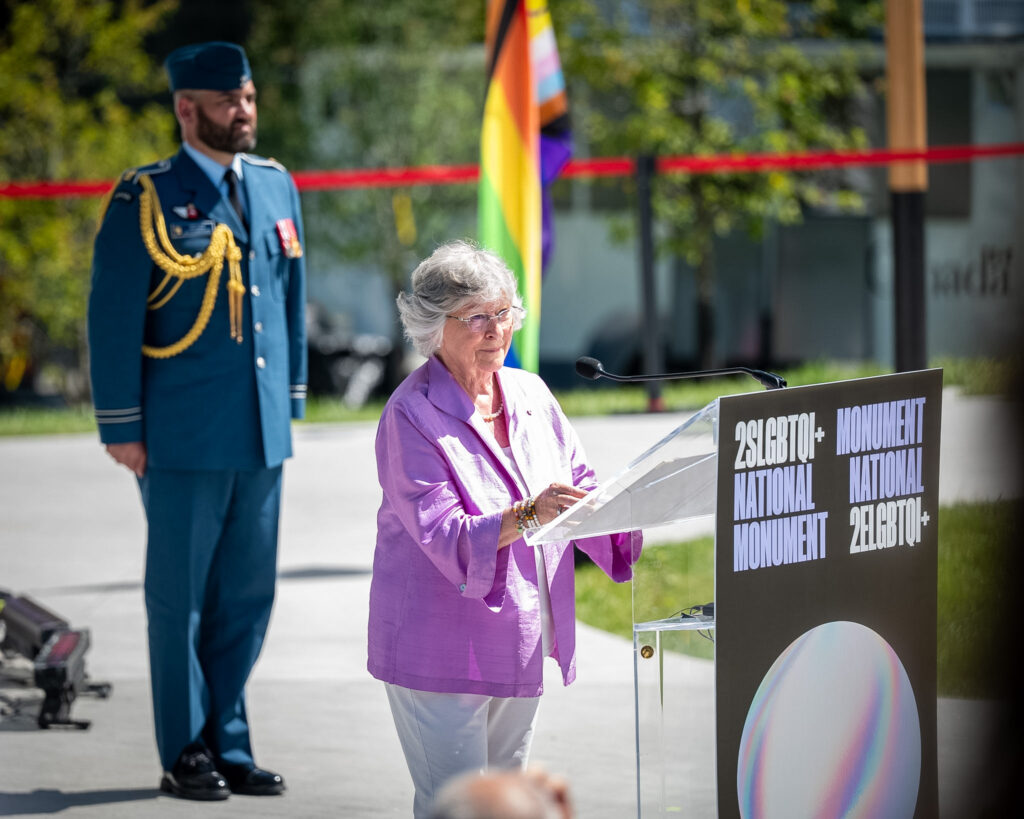
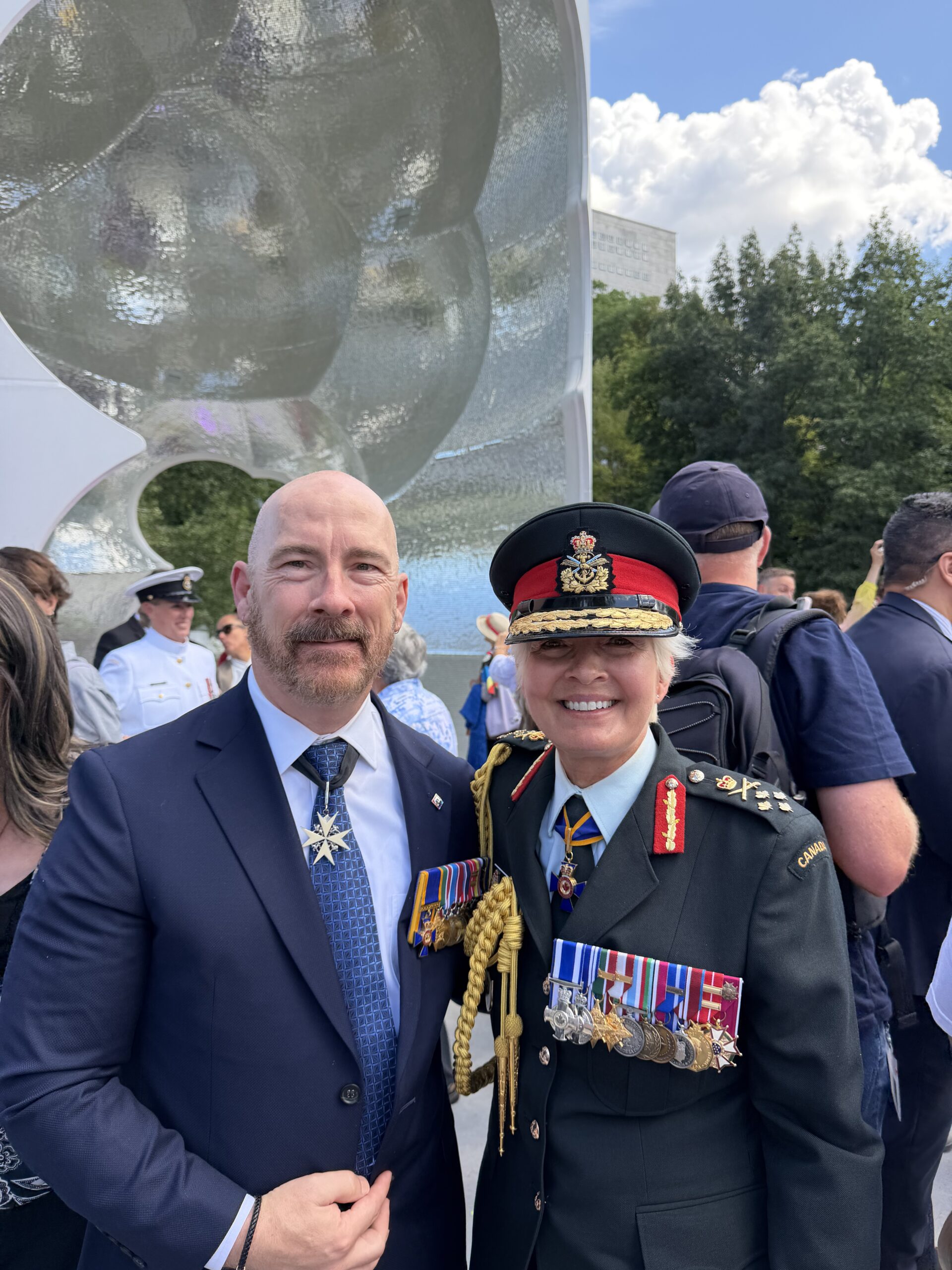
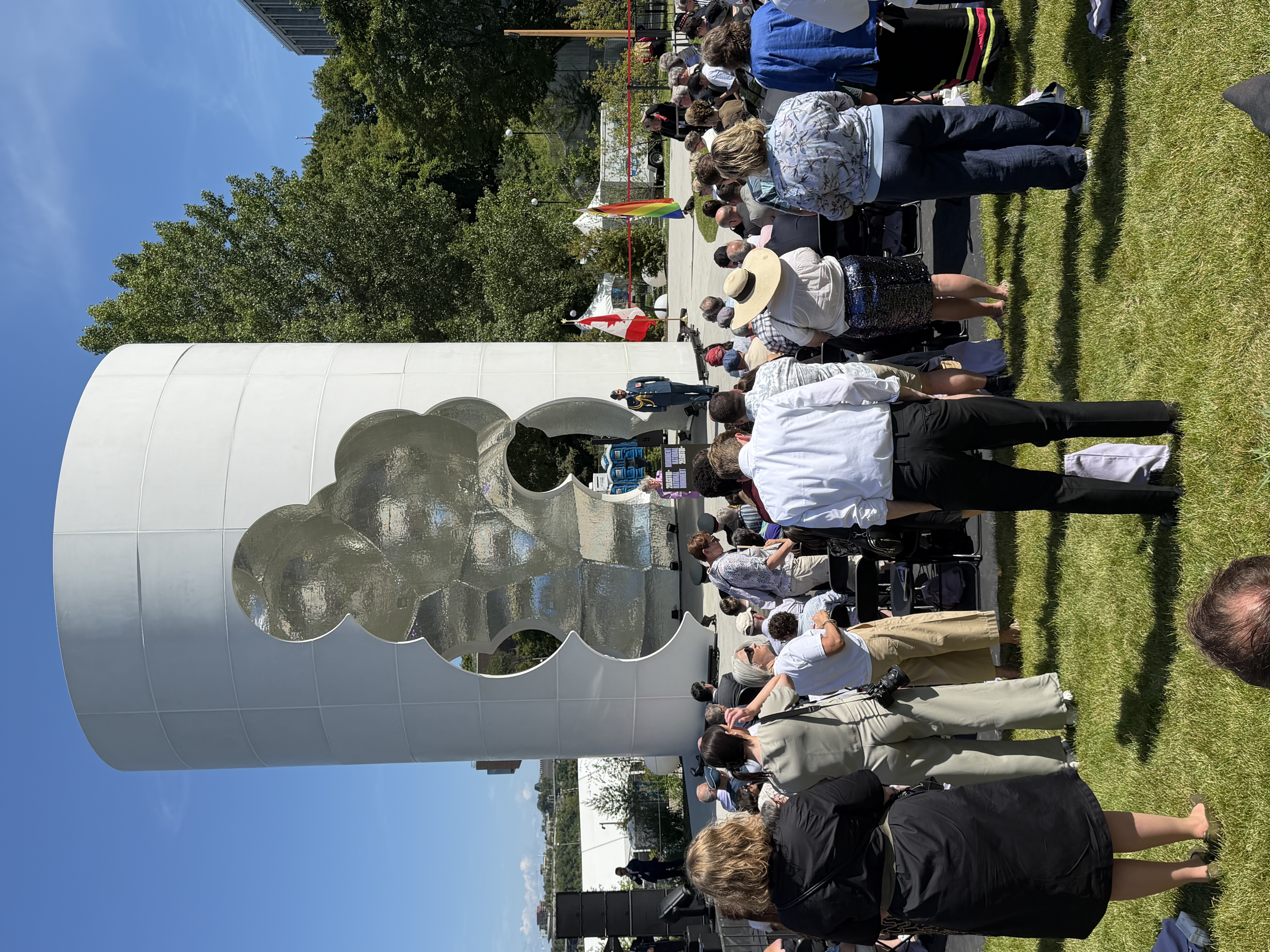
The Thunderhead Monument is the only national monument of its kind and recognizes the historic discrimination faced by generations of 2SLGBTQ+ people in Canada. The funds for this monument are a gift from LGBT Purge Survivors to 2SLGBTQ+ communities. The LGBT Purge was a federal government campaign that systematically hunted, harassed, and fired LGBT member of the Canadian Armed Forces, the RCMP, and the federal public service from the 1950’s to the mid-1990s. These funds would have gone to Purge victimes had they lived long enough to make a claim in the successful class action lawsuit launched by survivors against the Government of Canada. Their legacy lives on in the Thunderhead Monument. MNAC-Ottawa Unit member BGen Roger Scott, OMM, CStJ, CD, PhD, FCAN, NP, (Ret’d) attended the opening ceremonies where he met up with his former boss, the current Chief of the Defence Staff, General Jennie Carignan. CMM, MSC, MSM, CD. The opening ceremony on 21 September was attended by Her Excellency, The Right Honourable Lise Arbour, Governor General and Commander-in-Chief of Canada, The Right Honourable Justin Trudeau, Former Member of Parliament Svend Robinson, Parliamentarians, Members of the Diplomatic Corps, Invited members and most importantly, many LGBT Purge Survivors. Later the same evening, a party was held at the monument to continue the celebrations hosted by Priyanka and Maxence Garneau.
2026 Merchant Navy Veterans Day Commemorative Ceremony
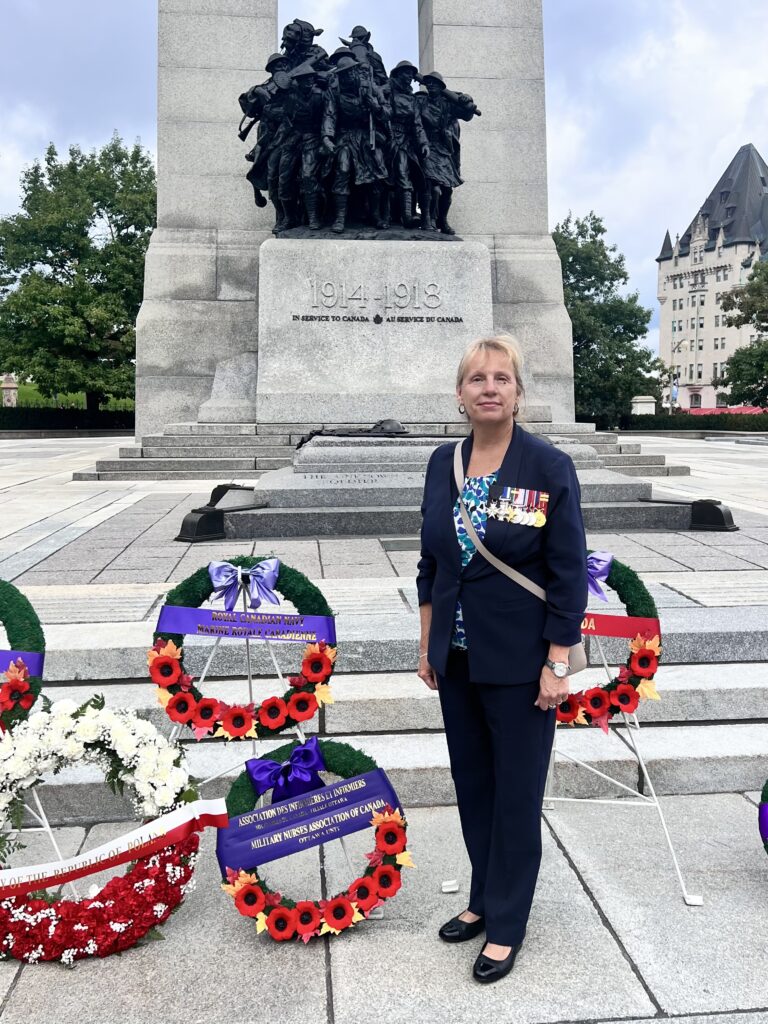
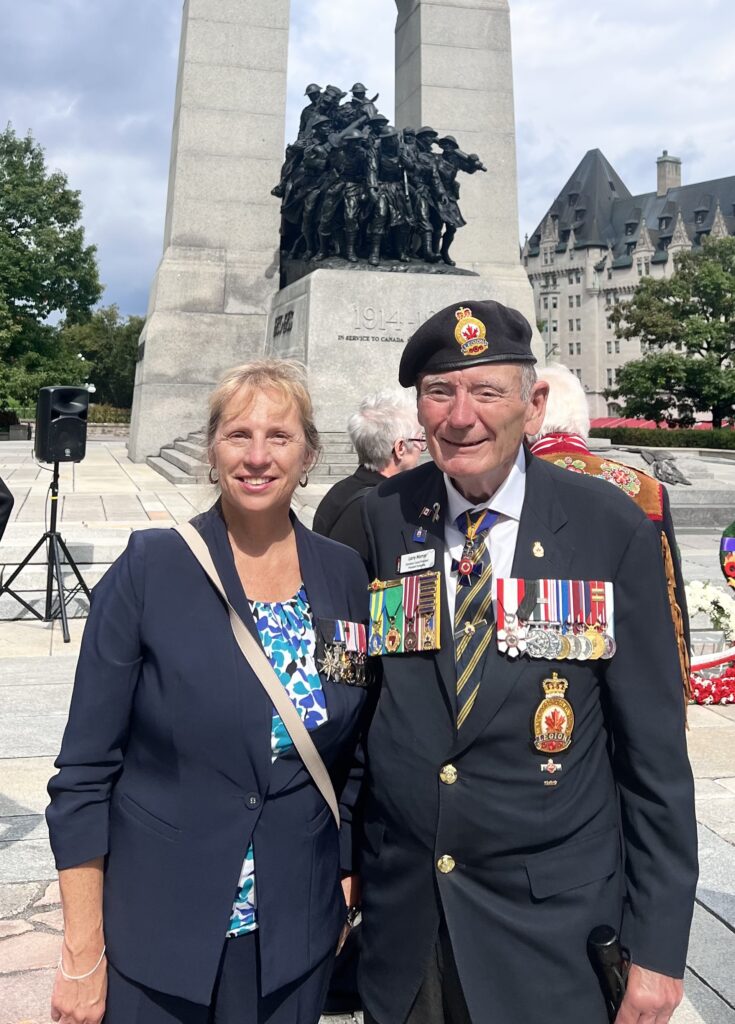
Date: 1100, Sunday, 13 September 2026 Location: National War Memorial, Ottawa
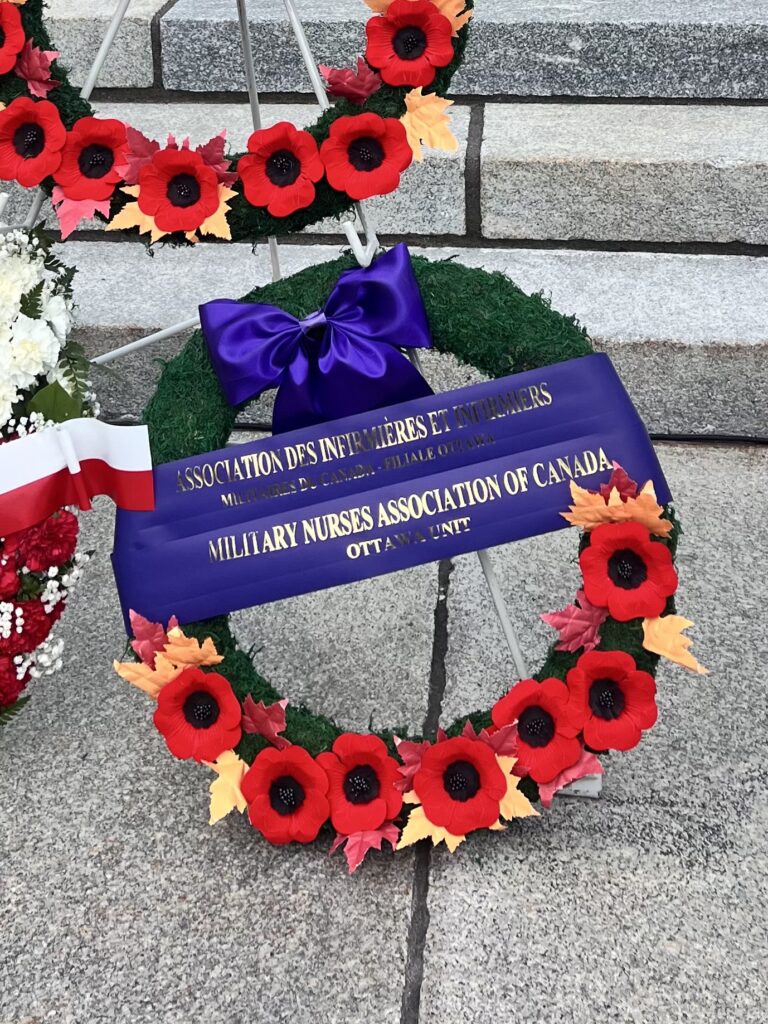
The Military Nurses Association of Canada was represented at the Ottawa Commemorative Ceremony for the Merchant Navy Veterans Day by the Ottawa Unit President, Colonel Gisèle Fontaine, MStJ, MSC, CD. This year’s ceremony recognized a shared maritime heritage – from the Voyageurs who carried people, goods, knowledge, and culture across North America’s waterways, to the Canadian and Allied Merchant Navy, the American Merchant Marine, and today’s global maritime community.
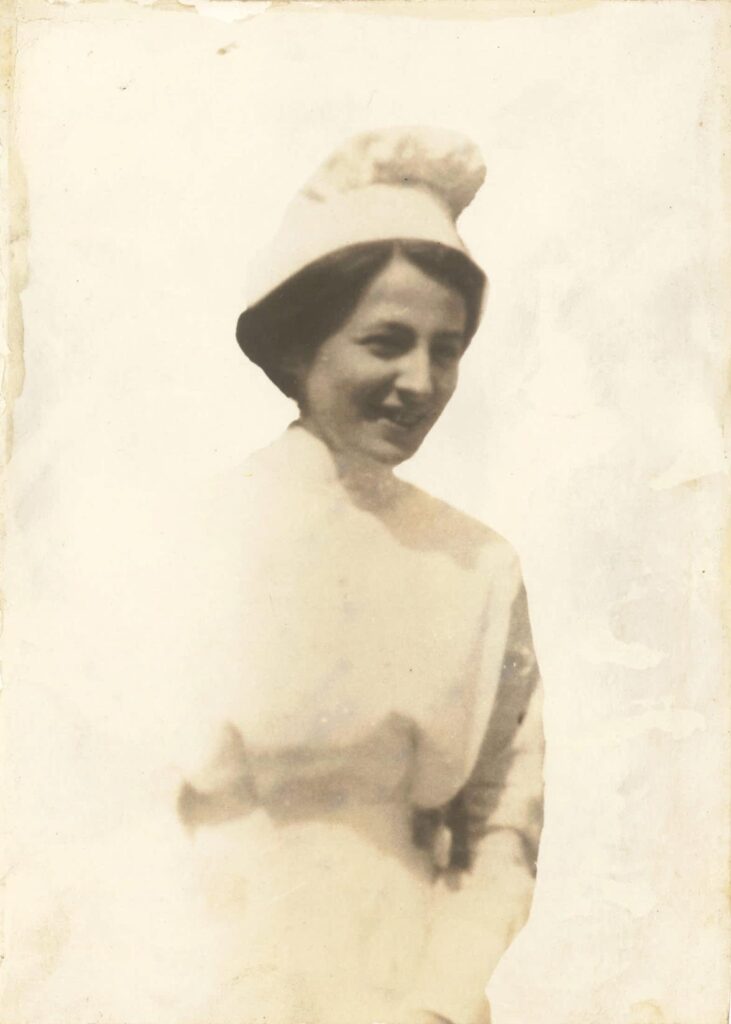
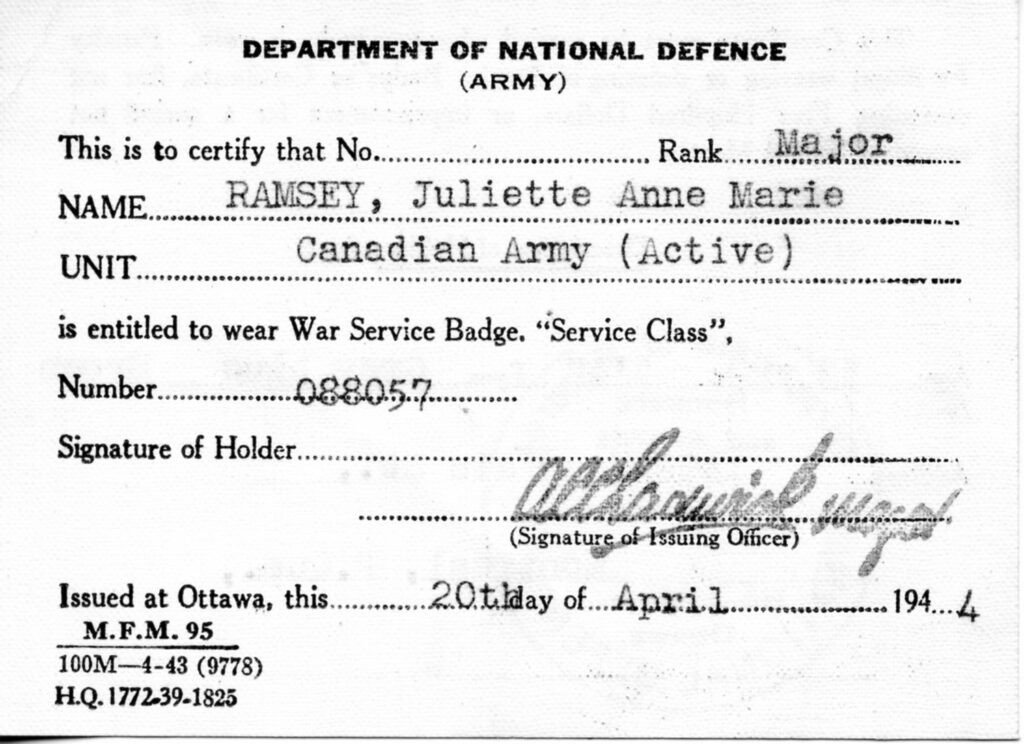
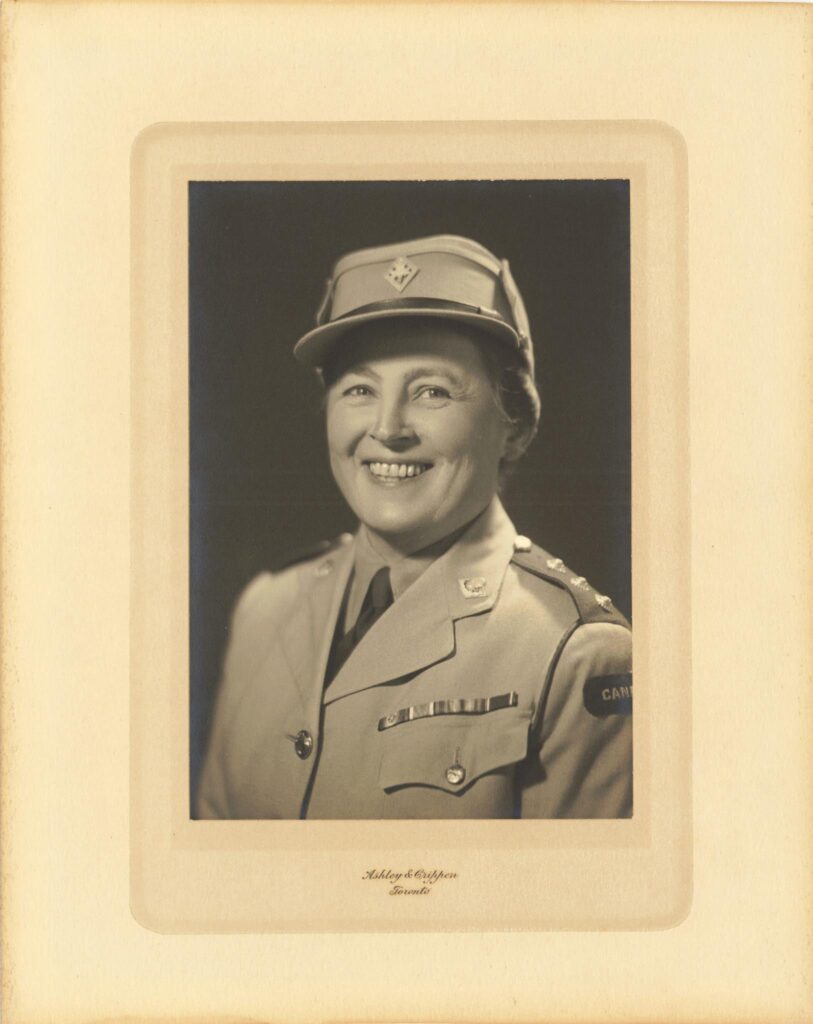
Major Anne Marie Juliette Pelletier Ramsey, DStJ
Founding President of the Overseas Nurses’ Association1
Service Summary
Rank
Major
Service
Canadian Army Medical Corps
Canadian Women’s Army Corps
Conflicts
First World War
Second World War
Years of Service
1914–1918; 1941–1944
Honours & Awards
Dame of Grace, The Most Venerable Order of the Hospital of St. John of Jerusalem; 1914-15 Star; British War Medal; Victory Medal; Canadian Volunteer Service Medal; King George VI Coronation Medal; Queen Elizabeth II Coronation Medal
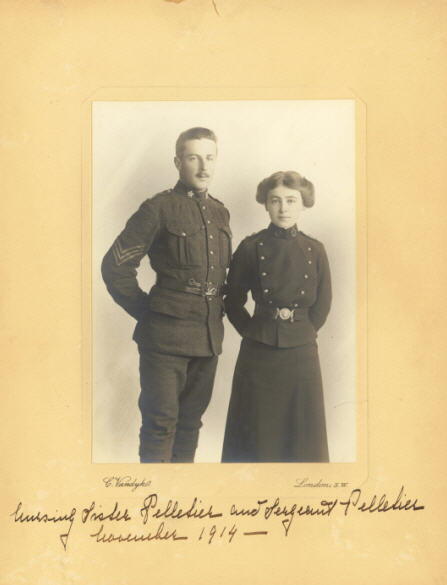
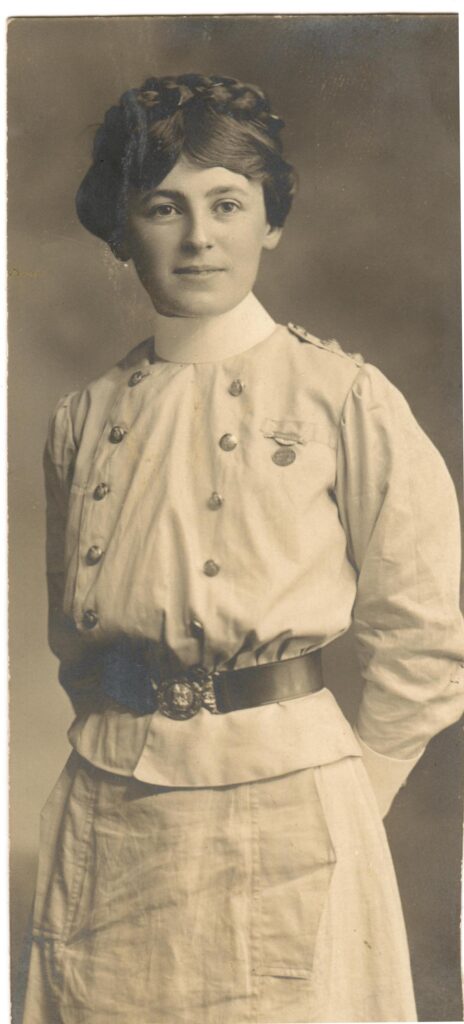
Anne Marie Juliette Pelletier was born in Quebec City, the daughter of Colonel Oscar Pelletier and Alice Archer, and the granddaughter of Sir Charles-Alphonse-Pantaléon Pelletier, Lieutenant Governor of Quebec from 1908 to 1911. Educated at the Sillery Convent before graduating from the Montreal General Hospital School of Nursing in 1914, she enlisted as one of Canada’s first Nursing Sisters with the First Canadian Contingent in September of that year.
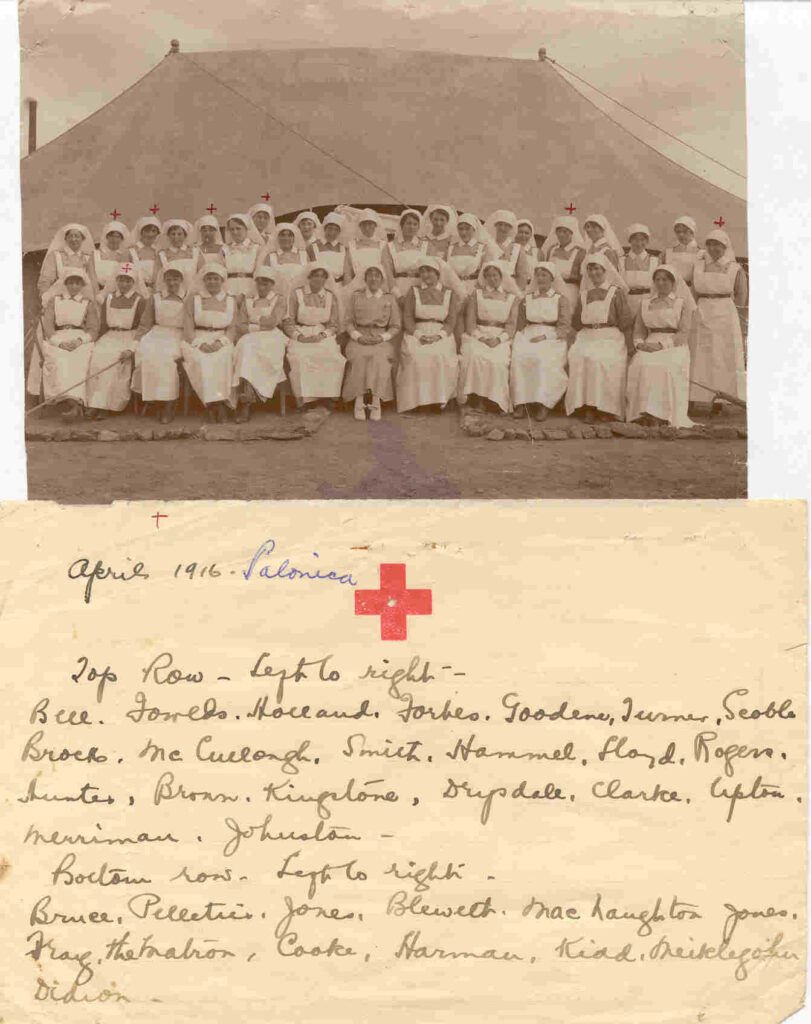
Serving overseas throughout the First World War, Juliette cared for wounded soldiers in France before serving with Canadian and British hospitals supporting the Dardanelles and Balkan campaigns. She later served in England before returning to Canada, where she concluded the war as Matron of the Valcartier Military Hospital.
In 1919, shortly after the war, Juliette travelled to Bombay (Mumbai) India to marry her fiancé, Captain Dr. G.A. Stuart Ramsey who was seconded to the Indian Medical Service. The couple settled in Montreal in 1923, where they raised a family and Juliette devoted herself to military, civic and charitable leadership.
Recognizing the importance of maintaining the bonds forged during wartime service, Juliette organized and became the first Dominion President of the Overseas Nurses’ Association of Canada, the organization that would later become the Nursing Sisters Association of Canada. She also served as Chairman of the Women’s Division of the Last Post Fund, held executive positions with the Association of Canadian Clubs, and was elected President of the Women’s Canadian Club of Montreal. A founding executive member of the Quebec Music Festival, she also served as Commandant of Auxiliary Services for the Montreal Branch of the Canadian Red Cross at the outbreak of the Second World War.
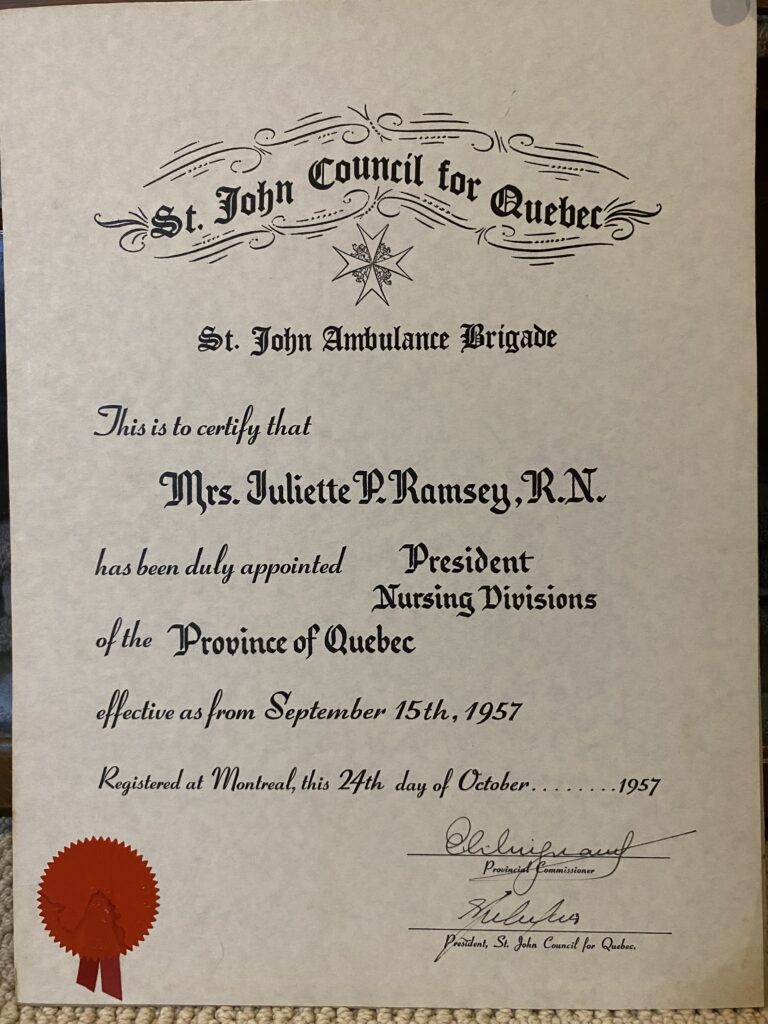
In 1941, while serving as President of the St. John Ambulance Brigade Nursing Divisions, Juliette answered the call to military service once again. Commissioned in the Canadian Women’s Army Corps, she helped organize the Corps in the Province of Quebec, serving as an instructor, assistant commandant and later recruiter before retiring in 1944 with the rank of Major.
Following the war, Juliette continued her lifelong commitment to public service through the Canadian National Institute for the Blind and St. John Ambulance. In recognition of her exceptional contributions, she was invested as a Dame of Grace of the Most Venerable Order of the Hospital of St. John of Jerusalem in 1960 and served as Honorary Provincial President of the St. John Ambulance Women’s Auxiliary in Quebec. A St. John Ambulance Brigade Division was named in her honour, and “Ramsey House,” a residence dedicated to the rehabilitation and training of visually impaired women in Montreal, also bore her name.
Major Anne Marie Juliette Pelletier Ramsey died in Montreal on 12 June 1970, leaving a legacy of military nursing, veteran leadership and community service that spanned more than half a century.
Research Note: This profile has been compiled from a combination of official military service records, Library and Archives Canada holdings, Veterans Affairs Canada records, published historical sources, newspaper accounts, and, where available, family records and photographs. The Military Nurses Association of Canada gratefully acknowledges the assistance of family members who have shared information and images.
Later became the Nursing Sisters Association of Canada and then Military Nurses Association of Canada. ↩︎
Combat Medic Graduation Parades
You’re invited: Combat Medic Graduation Parades Invitation: Parades de graduation du Personnel médical au combat
COMBAT MEDIC GRADUATION PARADE
8 ~ 15 ~ 22 August 2026 Connaught Ranges and Primary Training Centre, Ottawa
Join the Canadian Forces Health Services Group and the Royal Canadian Medical Services Association in welcoming the next generation of Combat Medics.
Combat Medic Parades
Parade de Graduation Personnel Médical au Combat
The Royal Canadian Medical Service Association (RCMSA) and Canadian Forces Health Services Director of Individual Training & Education are pleased to invite members of the Military Nurses Association of Canada to attend one or more of the upcoming Combat Medic Graduation Parades hosted by the Combat Medic Training Depot (CMTD) this August in Ottawa.
L’Association royale des services médicaux du Canada (ASSRC) et les Services de santé des Forces canadiennes, Directeur de l’instruction individuelle et de l’education sont heureuses de vous inviter à assister à l’une ou plusieurs des prochaines Parades de graduation du Personnel médical au combat, organisées par le Dépôt d’instruction des Médics de combat (DIMC) à Ottawa.
Over the past several months, the CMTD has trained 192 Regular and Reserve Force Combat Medics in support of the new occupation and the operational readiness of the Canadian Armed Forces. These parades celebrate the successful completion of their training and the beginning of the next chapter in their military careers.
We encourage MNAC members to join us in recognizing their achievements and welcoming these graduates into our military medical family.
Au cours des derniers mois, le DIMC a formé 192 membres du Personnel médical au combatde la Force régulière et de la Réserve afin de soutenir cette nouvelle occupation et la préparation opérationnelle des Forces armées canadiennes. Ces parades soulignent l’aboutissement de leur formation et le début d’une nouvelle étape de leur carrière militaire.
Nous vous invitons chaleureusement à venir reconnaître leur réussite et à accueillir ces diplômés au sein de notre famille médicale militaire.
Graduation Parade #1
Date: Saturday, 8 August 2026 Guests seated by: 0845 hrs Reviewing Officer: Col S. D. Pirie, Director Individual Education and Training 🎓 Approximately 46 graduates
Parade de graduation no 1
Date : Samedi 8 août 2026 Places assises au plus tard à : 08 h 45 Président de la cérémonie : Col S. D. Pirie, Directeur – Instruction et éducation individuelles 🎓 Environ 46 diplômés
Graduation Parade #2
Date: Saturday, 15 August 2026 Guests seated by: 0845 hrs Reviewing Officer: BGen M. Chenette, Commander, Canadian Forces Health Services Group 🎓 Approximately 73 graduates
Graduation Parade #2
Date: Saturday, 15 August 2026 Guests seated by: 0845 hrs Reviewing Officer: BGen M. Chenette, Commander, Canadian Forces Health Services Group 🎓 Approximately 73 graduates
Graduation Parade #3
Date: Saturday, 22 August 2026 Guests seated by: 0845 hrs Reviewing Officer: MGen S. Malcolm, Surgeon General and Director General Health Services 🎓 Approximately 71 graduates
Parade de graduation no 3
Date : Samedi 22 août 2026 Places assises au plus tard à : 08 h 45 Président de la cérémonie : Mgén S. Malcolm, Médecin général et Directeur général – Services de santé 🎓 Environ 71 diplômés
📍Location Building Air 1 Connaught Ranges and Primary Training Centre 1 Lewis Gun Road Ottawa, ON
📍Lieu Édifice Air 1 Champ de tir et Centre d’instruction de Connaught 1, chemin Lewis Gun Ottawa (Ontario)
Dress
Serving members: Combat Dress
Retired members and guests: Casual attire
Tenue
Militaires en service : tenue de combat
Membres retraités et invités : tenue décontractée
For more information: | Pour obtenir plus amples renseignements :
Capt/capt Elizabeth Han Administration Officer | Officière d’administration Combat Medic Training Depot | Dépôt d’instruction des Médics de combat elizabeth.han@forces.gc.ca
We hope many of you will join us as we celebrate this important milestone and welcome the next generation of Combat Medics.
Nous espérons vous accueillir en grand nombre afin de célébrer cette étape importante et de souhaiter la bienvenue à la prochaine génération du Personnel médical au combat.
Colonel Elizabeth Lawrie Smellie, CBE, RRC
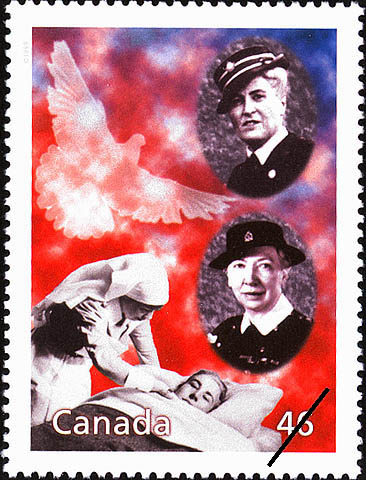
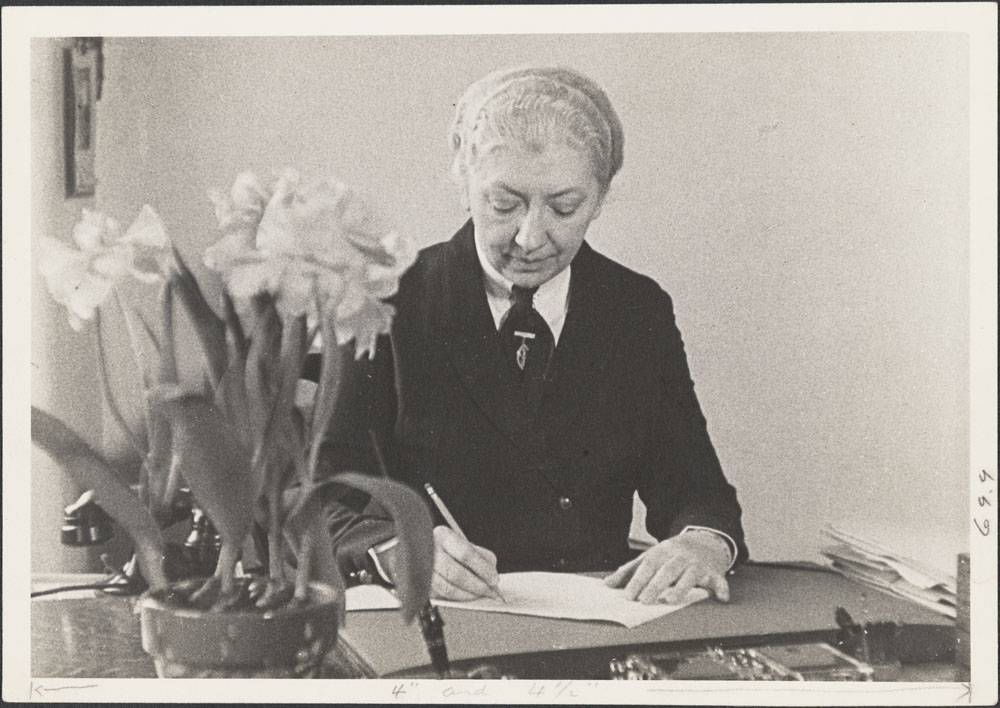
Colonel Elizabeth Lawrie Smellie, CBE, RRC (22 March 1884 – 5 March 1968) was one of the most influential figures in the history of Canadian military nursing. A veteran of both the First and Second World Wars, she served as Matron-in-Chief of the Royal Canadian Army Medical Corps during the Second World War and, in 1944, became the first woman promoted to the rank of Colonel in the Canadian Army, a distinction widely regarded as making her the first woman in the British Commonwealth to attain that rank. Through her leadership, organizational skill, and unwavering commitment to professional nursing, she helped shape Canadian military nursing for generations.
Born in Port Arthur, Ontario (now Thunder Bay), Smellie was the daughter of physician Dr. Thomas Stuart Traill Smellie and Janet Eleanor Lawrie. After completing her education in Port Arthur, she enrolled at the prestigious Johns Hopkins Hospital School of Nursing in Baltimore, graduating in 1909. Returning to Ontario, she served as Night Superintendent at McKellar General Hospital, where she quickly earned a reputation as an outstanding nurse and administrator.
When the First World War began, Smellie volunteered for overseas service and was appointed a Nursing Sister with the Canadian Army Medical Corps in 1915. Serving in military hospitals in England and France, she distinguished herself through exceptional clinical skill and leadership. In 1917 she was awarded the Royal Red Cross (First Class), one of the highest honours bestowed upon military nurses within the British Empire. By the end of the war she had been appointed Assistant to the Matron-in-Chief, gaining invaluable experience in the administration of Canada’s growing military nursing service.
Following the war, Smellie continued to advance the nursing profession. She undertook postgraduate studies in public health nursing before joining the faculty of McGill University, where she helped educate future nursing leaders. In 1924 she became Chief Superintendent of the Victorian Order of Nurses (VON), one of the most senior nursing appointments in Canada. Over the next fifteen years she strengthened community nursing services across the country, promoted higher standards of nursing education, and expanded access to public health care in rural and remote communities.
Smellie’s expertise earned international recognition. She conducted a maternal and child welfare study for the Rockefeller Foundation and served as First Vice-President of the American Public Health Association, reflecting the high regard in which she was held by colleagues across North America. In recognition of her exceptional contributions to nursing and public health, she was appointed a Commander of the Order of the British Empire (CBE) in 1934. In 1938, the Canadian Nurses Association awarded her the Mary Agnes Snively Medal, one of the profession’s highest honours, recognizing her outstanding contribution to Canadian nursing.
Voices of Service
I had the privilege of being an older woman in the Army this time and sometimes they listened to what I said.
Colonel Elizabeth L. Smellie, CBE, RRC
Matron-in-Chief, Royal Canadian Army Medical Corps
With the outbreak of the Second World War, Smellie again answered the call to military service, returning as Matron-in-Chief of the Royal Canadian Army Medical Corps. Her responsibilities were unprecedented. From a small peacetime establishment, she oversaw the expansion of the Army Nursing Service to more than 3,600 Nursing Sisters. These nursing officers served in military hospitals throughout Canada, Britain, Europe, the Mediterranean, and Asia, providing care wherever Canadian soldiers were deployed.
Her influence extended well beyond the Army Nursing Service. Smellie assisted in the development of the nursing services of the Royal Canadian Navy and the Royal Canadian Air Force, helping establish high professional standards across Canada’s military medical services. She also played a central role in the creation of the Canadian Women’s Army Corps (CWAC) in 1941. Recognizing that women could make valuable contributions in a wide range of military occupations, she helped open new opportunities for women to serve in uniform beyond traditional nursing roles, leaving a lasting impact on the evolution of women’s military service in Canada. She retired from military service later that year and returned to the Victorian Order of Nurses, guiding the organization through the transition from wartime to peacetime healthcare before retiring permanently in 1947.
Colonel Smellie’s achievements have been recognized through numerous honours and commemorations. She was designated a National Historic Person of Canada in 2011, and commemorative plaques stand in both Ottawa and Thunder Bay. Her leadership helped establish the professional standards and organizational foundations that continue to guide Canadian military nursing today.
Elizabeth Lawrie Smellie’s influence reached far beyond the hospitals in which she served. Through her leadership during two world wars, her stewardship of the Victorian Order of Nurses, and her advocacy for professional nursing, she helped shape the modern Canadian military nursing service. More than any other individual, she bridged the era of the First World War Nursing Sister and the professional military nursing officer of the post-war Canadian Armed Forces. Her legacy continues to inspire generations of Canadian military nurses committed to service, leadership, and compassionate care.
Research Note: This profile has been compiled from official military service records, Library and Archives Canada holdings, published historical sources, newspaper accounts, and other publicly available historical records.
Matron Edith Catherine Rayside, CBE, RRC, MiD
“A gifted leader, educator, and administrator, Edith Catherine Rayside helped shape Canadian military nursing during the First World War and the nursing profession that emerged in its aftermath.”
When Edith Catherine Rayside enlisted in the Canadian Army Medical Corps in February 1916, she brought with her nearly fifteen years of nursing experience, a university education, and a reputation as an accomplished hospital administrator. Those qualifications would propel her to become Canada’s Matron-in-Chief during the First World War, responsible for overseeing military nursing services across the country at a critical period in Canadian history.
Born on 26 January 1872 at Martintown, Ontario, Rayside earned a Bachelor of Arts from Queen’s University before graduating from the St. Luke’s Hospital School of Nursing in Ottawa in 1901. At a time when relatively few women attended university, she combined academic achievement with professional nursing education, establishing a foundation for a career that would span clinical practice, public health, education, and administration.
Before the First World War, Rayside’s career was anything but ordinary. She worked in private nursing, served as a public health nurse in Ottawa, and later became a district nurse in rural Saskatchewan. In 1908 she accepted the position of Superintendent of Nurses at the modern hospital operated by the Peñoles Mining Company in Mapimí, Mexico. Living through the political unrest of the Mexican Revolution, she gained valuable experience managing hospital operations under challenging conditions before returning to Canada in 1914.
Recognizing her exceptional administrative abilities, the Canadian Army Medical Corps commissioned Rayside as a Nursing Sister on 4 February 1916. Rather than serving as a junior nurse, she was immediately appointed one of only two matrons responsible for the nursing services of No. 2 Canadian General Hospital at Le Tréport, France. The hospital, with more than 1,000 beds, treated thousands of wounded and sick soldiers from the Western Front. There, Rayside supervised approximately seventy Nursing Sisters while ensuring the highest standards of patient care under wartime conditions.
Although she rarely wrote about herself, one surviving letter offers a glimpse into the realities faced by Canada’s Nursing Sisters. Describing the wounded arriving from the front, she wrote that their injuries were “too awful for words.” Yet, despite strict military discipline, she admitted to quietly giving Canadian patients “little favors on the Q.T.”—a reminder that compassion remained at the heart of military nursing even amid the horrors of war.
Rayside’s abilities soon attracted the attention of senior medical leadership. She was appointed Matron at Moore Barracks Hospital in Shorncliffe, England, before being assigned to the office of the Director General of Medical Services in London. On 11 September 1917 she returned to Canada to assume the appointment of temporary Matron-in-Chief at Militia Headquarters in Ottawa. In that role, she supervised nursing services in more than sixty Canadian military hospitals, managed the selection and posting of Nursing Sisters for overseas service, and helped direct military nursing during the influenza pandemic of 1918–1919.
Her distinguished wartime service earned significant recognition. She was Mentioned in Dispatches, received the Royal Red Cross (First Class) for exceptional nursing service, and was later appointed a Commander of the Order of the British Empire (CBE) in recognition of her lifelong contributions to nursing and public service.
Following the war, Rayside continued to influence Canadian nursing. After completing advanced studies in nursing education at Columbia University in New York, she helped modernize nursing education at the Montreal General Hospital and later served as Superintendent of Nurses at Hamilton General Hospital. She remained active in numerous professional organizations, including the Canadian Nurses Association and the Overseas Nursing Sisters’ Association of Canada, mentoring future nursing leaders and advocating for higher standards in nursing education and practice.
Edith Catherine Rayside retired to her family home in Martintown, Ontario, where she died on 20 December 1950 at the age of seventy-eight.
Today, Edith Catherine Rayside is remembered not only for her distinguished military service but also for her lasting influence on Canadian nursing. As Matron-in-Chief during one of Canada’s greatest national challenges, she demonstrated that military nursing required not only clinical excellence, but also leadership, organization, and unwavering dedication to those in need. Her career remains an enduring example of the professionalism and service that continue to define Canada’s military nurses.
Research Note: This profile has been compiled from official military service records, Library and Archives Canada holdings, published historical sources, newspaper accounts, and other publicly available historical records.
Remembrance Day 2026
Date: 5 November 2026 Location: RA Park
Our Annual Remembrance meeting. More details to follow.